Thursday, 16 May 2013

IDAHO Day 2013


Today is IDAHO day - International Day Against Homophobia 17 May. 


Last year on this day, I wrote an extensive piece on my thoughts about homophobia: its relationship to patriarchy, sexism and misogyny and a personal anecdote to explain that we none of us are immune from its hateful clutches (you can still read the post on the BGBC Blog). 

This year I want to write about two other points about homophobia.


The first is the oft-thrown allegation that it should not be called homophobia because a phobia is a fear and dislike of gays is not a fear. 
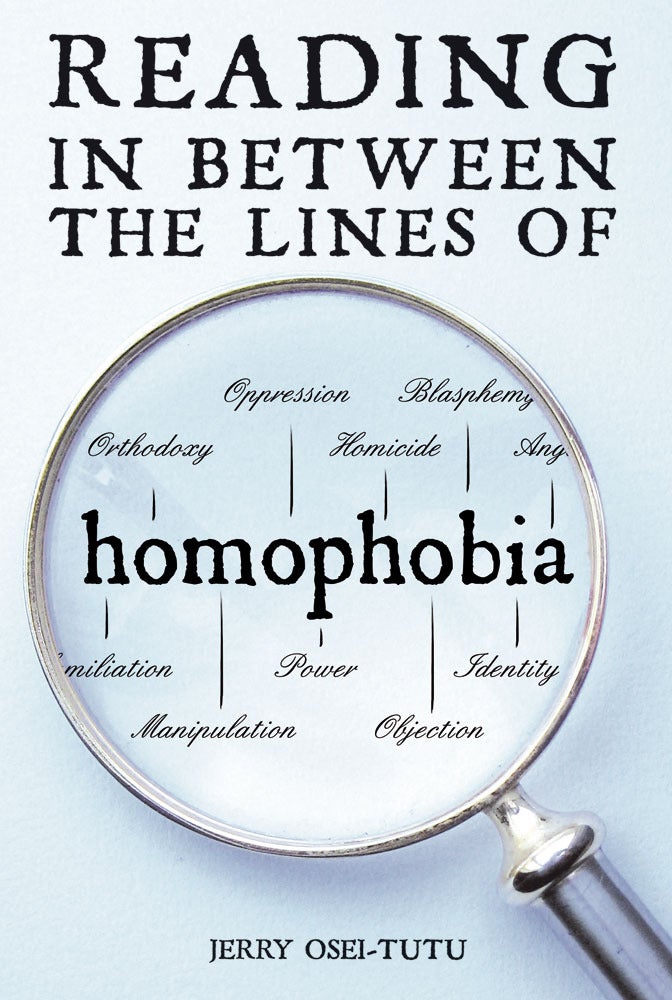


Bookcover
The uneducated red-neck homophobe says, "I ain't afraid of no faggot,"  while the educated middle class homophobe says, "I am absolutely not bigoted but I do not accept homosexuality as a legitimate lifestyle and it is most certainly not because I am afraid of gays." At the conclusion of last year's IDAHO post, the following comment was made (sic) - "Phobia means fear and not everyone is afraid of Gays. They may be ignorant but they don't fear. And to use the word education doesn't solve anything. People have the right to opinioniate what they feel. If a person doesn't like baseball does that mean they have a phobia of baseball? It all comes down to respect".

Now notice the attraction to the semantics of the word phobia meaning fear. There seems to be an implied sense to these sorts of statements that the idea of fear is something to be ashamed of. Or to put it another way, any real man ought not be afraid of anything, that fear should not be part of his emotional repertoire. Fear would be a shameful thing in this context. Which is just plain silly because of course, all humans are capable of fear and to suggest that men don't fear just because they are men is just patriarchal nonsensical stereotype. Yet you do come across this notion quite a lot and indeed I spoke at length about patriarchy and its effects on both men and women in the former Blogpost on this topic.

But to the crux of the commenter's statement. The gist runs thus: everyone is allowed to have their own opinions and just because you don't like something eg., baseball or gay people, that does not mean you are afraid - of baseball, gay people. So it's not a phobia. Now leaving aside that he gives moral equivalence and value to baseball to the same degree as he does to gay people, is he right? Just because I don't like gay people doesn't mean I am afraid of them or have a fear of them. That's right isn't it?

Well, there is more than one way to have fear and there are also degrees of fear. Those such as our commenters draw a picture of fear as a person frightened or cowering with fear or terror. But that is not the type of fear we are talking about when we use the word phobia in homophobia. No, it is more subtle than that.


Australian anti-homophobia television commercial
The fear that is produced is the fear that I might be seen to be gay too. It is the fear that I as a straight man might be lumped together with those gay people over there by a society that does not accept or understand gay people and I might be thought of or judged to be gay too. 

Some simple everyday examples. I don't wear a jumper which has yellow in it because it is too bright and might look a bit girly (real men only wear varying shades of grey, brown and black). People might think I'm gay. I don't sit with my gay mate in the cinema (as happened to my partner once) because I wouldn't want people to think that we're together as a couple. If I'm walking with another guy down the street, I walk at least one metre away from him lest anybody think we're walking a bit close for two straight guys and they think that we're gay. I would love a glass of white wine to go with my fish but I order a beer because there are other men here too and they might think a white wine is a bit girly. I don't get my hair cut too short even though I love it short especially in summer because people might think I'm lesbian. I don't go on the bike ride fund raiser for breast cancer with my lesbian friend, because people might think we're together. There's no fear here, is there?

All these examples and thousands of other little everyday things stop us from being who we want to be, talking to the people we want to talk to, being with the people we want to be with, acting the way we want to act - all because we fear being tagged as gay. When I am straight, one of the most challenging thoughts I can have is that people might think I am gay. Watch how quickly, people correct the misinterpretation or even the possibility. I often wince when people use the word 'partner' about someone they're in a business association with and then quickly add, "business partner" lest anyone think they're gay.

This is fear pure and simple. The straight world fears being thought of as gay. I think we gay guys see it more often (but I could be wrong) and more easily. Male homophobia, even perpetrated by friends or family, is pretty hard to miss.

IDAHO Day is a great reminder to add the necessary corrective to the traditional view - that there is nothing wrong with being gay and that to be thought gay is not a fearful thing. I like some of the straight stars of screen and the sporting field who are comfortable and confident in their sexuality and who know they are admired by gay people as being a 'bit of alright.' They exemplify the kind of thought I speak of here: that they can be with gay people, that they can even be admired by gay people as good looking and they are perfectly okay with it. After a dinner party once, I was leaving the house and the hosts, a lovely straight couple, both gave me a kiss on the cheek and a hug. The guy was as surprised as I was and we just smiled at each other. No fear. No silly retraction. Just a lovely bond between the three of us.

The phobia in homophobia is real because the fear is real. The stain on the lives of gay people is real because of it.


The second point I want to make about homophobia is this. It can manifest in two ways. 

I call them overt homophobia and covert homophobia.


cabbages and kings blog
Overt homophobia is the one we all avoid as gay people. It is the angry guy calling us faggot or poof with hatred in his eyes. It is getting sacked because you're gay. This is illegal in Australia now, but wasn't always. And there are still places around the world where such prejudice is permitted to thrive. Overt homophobia is in your face. It's out there and open. It's forceful and combative. It is belligerent. It is violent. It is scary. It is ugly. And it feels horrible, a gut wrenching emptiness in the pit of your stomach, if you're a victim of it. There is often a sense of incredulity after being victimised by overt homophobia, a sense of "I didn't deserve that. I was just being me".


Cate Faehrmann website
And then there's covert homophobia. This is more insidious. This is not in your face. This is where warmth and friendliness are withdrawn from you. This is where affection is clandestinely removed. This is where people are passive-aggressive because you are gay. This is where everyone else gets asked to the party but you don't. This is where families or friends freeze you out because they cannot handle your sexuality. One of the most subtle but powerful versions of this is where there is tacit agreement between members of a family or group that your gayness will not be talked about. There is a deafening silence around all things gay including your own sexual identity. Out people have been forced back into a closet where with some people, they are 'not allowed' to speak of their real lives. The pressure not to speak is never articulated but is there and is powerful nevertheless. So we speak about everything else, just not that part of our lives. There is no shouting. There is no argument. There is no obvious pin-point time of estrangement. No, it just happens around you and after a while, you begin to notice. Things don't feel the same. Things are not the same. I feel more isolated in my own group, in my own workplace, in my own family. Covert homophobia can easily be denied. "No, of course we didn't exclude you from the office party. How could you possibly think that?" It's harder to pin down. But it is just as real. When you finally do recognise it for what it is, it hurts just as much as the more obvious type.

If you are a gay person, you need to look after yourself and your mental health by not placing yourself in harm's way. You deserve better of course and some people, when challenged about their homophobia, will grow and abandon it. Others unfortunately will never get it. 

If you are a homophobic person, I challenge you to face your fear and stare it down. Go and talk to a gay person. Get to know someone gay. You will see that that person is essentially just like you in all the important ways that really count.


Image courtesy: ©2009 Jupiterimages
IDAHO Day is a day when we speak about homophobia, when we single out a certain kind of prejudice, the prejudice against gay people for just being gay. All prejudice is an assault. All prejudice is ugly. All prejudice grows in fear. All prejudice grows in ignorance. It others the hated group and turns them into monsters. But gay people are not monsters. We are like every other human being, with a dignity and value and worth that is integral to all human nature. We are capable of great good and great love. We understand the gift of family very well. And we understand that the most powerful force in the universe is love, the very opposite of hate. For those of us who are of faith, we believe that love is the essence and nature of the Divine. And that is why we believe that love conquers all. On this IDAHO Day as we ponder the nature and effects of homophobia, tell someone you love them. And be loving to those around you. Change your small part of the world by love.


Pax et Amor - Stuart


Thursday, 9 May 2013

The Apology


Here is the apology that the Christian Church needs to offer the gay people of the world. It doesn't seem to be forthcoming at the moment from the Church, so I have penned one myself on the Church's behalf to give it an idea of how this might go. To give credit, there are some in the Church who do feel this way, but still not enough. So share it with your Christian friends. Share it with your pastor, your priest, share it with your bishop. The church needs to change its view of gay people and its treatment of gay people. We too are part of God's incredible human family.

The Church could start by asking for forgiveness. It could start with an apology.


To Gay People the World Over


We the Christian Church, while professing that our reason for existence is to spread the knowledge of God in the manner of Jesus of Nazareth and to show God's love and compassion for all humanity by our lives, with Jesus as our exemplar, most especially to the down-trodden, the weary, the sick, the old, the widow, the orphan, the prisoner, the weak, the oppressed, the poor and the marginalised, acknowledge that we have fallen so far short in our attitudes toward and our treatment of one marginalised group - gay people - that our actions can only be described as sin. And sin of the gravest kind. We have called that which God has created good, evil. We have contaminated the worth of your lives with toxic shame and presented you to the world as reprehensible and filthy, as the epitome of moral repugnance.

We know that one of the earliest words in the Scriptures for sin was an archery term, the Greek word hamartia (ἁμαρτία) describing an arrow 'missing its mark.' As the Church of Jesus Christ, we freely acknowledge that we have completely missed the mark regarding gay people from the very beginning and that two thousand years of history has not seen us grow any more enlightened. To this very day, we continue to judge you, deny you, reject you, pillory you, vilify you, denigrate you, condemn you, besmirch you, denounce you and exclude you and we do this for one reason and one reason only - your sexual orientation.

We do humbly and abjectly apologise for our actions. We acknowledge our mistreatment of you. We ask for your forgiveness even though we know we do not deserve it.

We own this great transgression of Jesus' first and only commandment of love. We have been anything but loving. We have been the antithesis of loving. We have been an organ of hate.

For these sins we are truly sorry.


Artist Unknown
We have clung to out-dated interpretations of Biblical passages. We have refused to openly explore modern scholarship that brings to light so much about the Bible, Jesus and his teachings that we never knew before. We have been openly belligerent towards you and have acted in pride as we shot you down in flames and pronounced judgment over your lives as an abomination. We have behaved towards you in dialogue from a place of hubris where we haughtily saw ourselves as the saved and you as sinners. We have ignored your feelings as if they did not matter; that only our precious pronouncements mattered. 

For these sins we are truly sorry.

We have told the world that your life is not natural, that you are set against nature and in so doing, you are set against God. We have told the world that you are sick and disordered and sinful, that you are deviant and that your love is not real but is only lust. And we have told the world that lust is evil. We have told the world that your whole lives are 'inclined to moral evil,' a statement so grandiose in its language and so all-encompassing in its reach that you gay people are left reeling because such language is usually reserved for despots and tyrants, the cruellest of the cruel. 

For these sins we are truly sorry.


Artist Unknown
We have pitted parents against their gay children. We have caused untold damage in families. We have stopped you from ministering in our churches. We have sacked and dismissed you from legitimate posts because of your sexual orientation. We have impeded your promotion and even put up barriers for your housing. We have refused the communion service to you. We have forbidden you to remain in our fellowships because of your lives. We have persisted in calling your life a ‘lifestyle’ and your orientation a ‘preference,’ knowing full well that those words are not only illegitimate but are also heavily loaded emotionally and politically. 

For these sins we are truly sorry.


We have ignored the wisdom of science. We have refused to acknowledge that you are born gay. We stubbornly declare to the world that your 'sexual preference is a choice,' despite knowing the fact that science has been able to show definitively that there is a substantial genetic component determining all human sexuality. But we haven’t cared about that. That does not fit our ancient world or mediaeval worldview, so we just ignore the research and dismiss it out of hand, acting as though it does not exist. And we continue to trot out our worn-out arguments and pronouncements with divine certitude while we argue with one another as to which of us has faith the most right. And while we're busy arguing among ourselves, we trample you underfoot with carefree abandon as we pour out rejection and judgmentalism from our bile-filled mouths. 

For these sins we are truly sorry.

We set up our own idols. Men usually. We follow their every pronouncement and treat them as celebrities. Hatemongers who are either ignorant, prejudiced or have some personal axe to grind about sexuality. But also the Church. We construct its systems as though they are set up by God and use the weapon of bureaucracy against you. The Bible. Some of us worship the book instead of seeing it as a pointer to the One. 

Idolatry. Ecclesiolatry. Bibliolatry. We listen to homophobes and misanthropists and share their words while we worship a book instead of the God that it speaks of. And we hide behind church governance instead of relating to you as fellow human beings. And from our book and from our churches and from our God, we exclude you. We other you like we have othered no other group in history. We have resolutely painted the picture as us and them. We have done this for centuries. We are the us. And you are the them. 

For these sins we are truly sorry.


Artist - oldshuck
We have even told you that you had to change, even though we know in our heart of hearts that there is no change. We have set up ministries to lie to you to tell you that your lives are worthless as they are. You must change, that you are not good enough as you are. You must turn yourselves into heterosexual people. Against all evidence, we have told you that you can do this by the power of God and with our support. We did not tell you that should you succumb to our ministrations you would forever be in limbo, a no-man's land where you will never be straight and you cannot call yourselves gay. And even if you do marry an opposite sex partner and even have children, we will still never quite accept you. We do never quite go the full distance to full acceptance. We have ignored the signs from around the world after some of you have committed suicide because you couldn't cope with what we did to you in these ministries. However despite the deaths, we have continued on, referring young vulnerable gay people, mostly brought up in the church and in Christian families, to these ministries at a time when they are emotionally defenceless and the power differential between them and us is gargantuan. We have harmed you. We have killed you. We are responsible. 

For these sins we are truly sorry.

In our realisation of the grotesque distortion of the Christian Gospel that we have offered the world, a distortion that the world rightly rejects, we abjectly apologise to you. We have debased the Good News and driven people away from God and from life in the Spirit. We have put before the world a false dichotomy between the sacred and the profane and we have put sex and desire in the profane. It is no wonder we have rejected you for you have had to go on a spiritual and emotional journey to be able to accept yourselves at the sexual level. We are frightened of this. We are frightened of sex, of desire. We always have been. We fear you and your comfort with sexuality. We have placed celibacy as the zenith of human conditions and even mandated some of our clergy to live this way against all inclination for the rest of their lives. And we tell young gay people that they too must be celibate and deny an integral part of their identity for the rest of their lives too.

For these sins we are truly sorry.


Contrition in the Grass - T. Caperton
We are mortally and grievously at fault here. Like the old Latin words we say contritely, 'mea cupla, mea cupla, mea maxima culpa - through my fault, through my fault, through my most grievous fault.' We are stripped and laid bare and our transgressions are unveiled for all to see.

Our sins have been grievous and manifold. We have not acted like Jesus at all. We have not shown love or compassion. We have been quick to occupy the divine judgment seat and speak with hubris as if the plank in our own eye were not big enough already.

In apologising and asking for the forgiveness we do not deserve after perpetrating so much hurt and so much harm, we seek to redress our sinful actions. We need to make recompense. We need to change.

We will be the followers of Jesus we were always meant to be. We will have love and charity as our foremost test of everything we do and everything we say. We will seek out and ask for your views and value your opinions. We will include you in our liturgies and as part of our clergy. We will happily employ you. We will desist from calling you unclean, disordered and evil. We will abandon such language forever. We will stop using the Bible as a weapon against you and start reading the scriptures in the light of modern scholarship. We will be big enough and strong enough in our faith in God to say where we think the peoples of the ancient Biblical world got it wrong, such as with slavery, women, the death penalty, and gay people, among other issues. We will have a strong and robust faith that is partnered with reason so that our God and our faith are not mocked and laughed to scorn by an educated, literate, post-enlightenment humanity. We will speak out for equality for all human beings and denounce homophobia specifically. We will be strong advocates for gay people so that you feel welcome, valued and loved as part of the family of God.

We will do our best to make up for the centuries of trauma. We do not know how long it will take for you to trust us and to forgive us. But we openly and honestly offer you our sorrow, our contrition, our apology for our actions past and present.

For these and all our sins against you we are truly sorry.


Pax et Amor - Stuart


Sunday, 27 January 2013

Queers and Religion - Bent tv

A few months after BGBC was published in 2012, I went to Melbourne to do some media work around the book. One of the interesting gigs I got to do was appearing on Bent tv which did a special episode on LGBT people and religion. Bent tv is Melbourne's queer television station. 

With me were fellow guests, good friend Rev Joy Etwell, Julie Leder and Michael Barnett. Hosting the show was Remy Scholten. It was lots of fun and even though we didn't get time to discuss issues in depth, we did get to touch on some important issues like the one so many gay people ask: 'why on earth do you stay in religion after so much hurt has been done to LGBT people by the religious community'?

You can watch the episode here or click on the YouTube icon and watch full-screen. I hope you enjoy it. And do share it around if you think it will help others you know. 


Pax et Amor - Stuart

Monday, 14 January 2013

Same-Sex Marriage - elephant tv

                     Happy New Year to Everyone 


My hope and prayer for you all this year is that 2013 will be a year of love, laughter, learning, connection and emancipation. 

Let's make it happen for ourselves and for others too.

Below you can watch the trailer for the discussion  that I had on elephant tv in October 2012 in Auckland New Zealand about Same-Sex Marriage. There were two of us in support and two against. The discussion was respectful, engaging, passionate and fun.

The full documentary can be seen on the link immediately below.


                                   elephant tv presents 


                           Same-Sex Marriage - The Trailer


Four passionate and experienced professionals from very different perspectives discuss same-sex marriage from a Christian perspective. Expected to be one of the most controversial episodes of our first series, with the most clearly opposing "sides" of any of the topics, this instead turned out to be one of our most emotional episodes, including an unscripted apology and more than one round of spontaneous hugging. A must-see for anyone interested in marriage, the church's role in marriage, and what an evolving marriage tradition could look like in Christian communities in the future.


And here is a short clip that did not 

survive the cutting room floor.


Pax et Amor - Stuart

Sunday, 9 December 2012

It's Not Natural (Part 2)


The Idealistic View

The second view of nature can be called the idealistic view. There is some overlap with the realistic view in that it too encompasses nature as ‘all physical things’ as well as ‘the non-human’, but there is one important difference.


The idealistic view presupposes and explicitly states that nature is good. 


It holds that:


  • while some things may be of a sad or distressing nature, and while some things can even be thought of as being ‘evil’, they are still said to be natural in that there will a good in the long run, in the grander scheme of things;
  • thus, things are unnatural when they are truly evil and there is no good in the present or the future, since nature could not produce evil on its own.

This view of nature or ‘natural’ is strongly conditioned by observation of the real world, but is ultimately conditioned by cultural values and practice including ecclesiastical values. This is particularly the case in the negative form – unnatural – where such an epithet is a vehement alternate word for ‘bad’ or ‘unacceptable.’

“Behaviour which is ideologically so alien or personally so disgusting to those affected by ‘ideal nature’ that it appears to have no redeeming qualities whatever will be labelled ‘unnatural,’ regardless of whether it occurs in (‘real’) nature never or often, or among humans or lower animals, because it will be assumed that a ‘good’ nature could not under any circumstances have produced it” (Boswell, p13).

Thus it is not surprising that adversaries frequently characterise gay sexuality as being unnatural when in reality, they merely object to it on religious, ideological or cultural grounds.


Gay Sexuality and The Idealistic View


Here are some ideas from Boswell.

  • The ‘idealised’ model of what is natural took hold in the very early Christian centuries and the ‘realistic’ model was eschewed or ignored. Thus, the idea that homosexuality was unnatural took root and may have been started by a chance remark of Plato in his Laws, in which he describes it as para physin, traditionally translated as ‘against nature’ but more probably translated in Plato as ‘unrelated to birth’, ‘non-procreative’, as all his earlier works discuss sexual desire as almost exclusively homosexual without the epithet ‘unnatural’.
  • The idealised notion that what is outside of nature is unnatural became the touchstone of human ethics for the first few centuries after Christ and thus any sexual activity that was non-procreative was deemed unnatural;
  • However, this view fell into disfavour after only a few hundred years, but was revived by the Scholastics in the 13th century. 

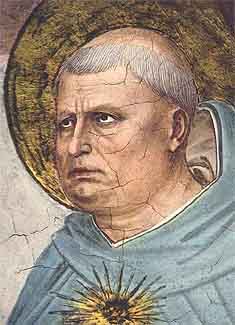
St Thomas Aquinas
the most famous Scholastic of them all
The Scholastics were a branch of theology and philosophy that grew out of early monasticism and was influential from the eleventh to the fifteenth centuries. It espoused dialectical reasoning and used logical inference to defend Christian dogma and to counter contradictions and arguments. Thus the ‘idealistic view’ came to be a decisive and controlling explanatory device that premised all branches of learning from the technical sciences to dogmatic theology. God has given us nature to teach us. Nature is his His creation. It is therefore good. That which humanity offers is lesser and can be seen as unnatural.

In the twenty first century, this view has been discarded by science and philosophy long long ago. It has been utterly rejected in almost all spheres of life. 

We regularly and frequently do things that would be deemed unnatural according to this view. For example, we fly on aircraft, we sail in ships, we drive in cars, we comb and wash our hair, we shower, we shave, we cook our food, we clean our teeth, we eat special food on special days like Christmas, we grow flowers and plants indoors, we dye fabrics different colours, we practise birth control. Not one of these things among the thousands of others that I have not mentioned belong in the ‘natural world;’ they are all unnatural in this sense. Yet the power of the idealistic view is brought to full force against gay people on the erroneous assumption that homosexuality does not occur in nature. This stigma is just intellectual laziness and emotional blackmail couched in the language of philosophy but drowning in inconsistency.

“Although the idea that gay people are ‘violating nature’ predates by as much as two millennia the rise of modern science and is based on concepts wholly alien to it, many people unthinkingly transfer the ancient prejudice to an imagined scientific frame of reference, without recognizing the extreme contradictions involved, and conclude that homosexual behaviour violates the ‘nature’ described by modern scientists rather than the ‘nature’ idealised by ancient philosophers” (Boswell, p15).

The use of the idealistic view to denigrate homosexuality as being unnatural (and therefore immoral) is nothing more than a powerfully derogatory label based on “historically sanctioned prejudices and ill-informed ideas about ‘nature’” (Boswell, p15).

Please don’t miss this point.  Gay sexuality does not violate nature in any way. It violates only an idealised view of nature by ancient philosophers.


A Scientific Understanding of Gay Sexuality

Again, allow me to go the modern understanding of gay sexuality, based on biology, genetics and psychology; in effect, the nuts and bolts of the first half of Being Gay Being Christian. 

Human sexual orientation consists of two dominant orientations: heterosexual and homosexual. The former is about 95% of the population while the latter is about 5% of the population. Thus, gay sexuality represents statistically about 1 in 20 people. Gay sexuality has been identified in every society and culture on earth without exception so the anthropologists tell us and has been identified back as far as human records go, so the historians tell us. 


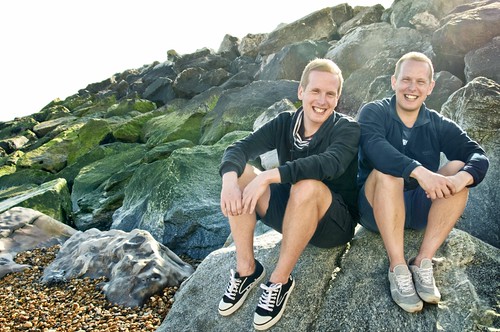
Identical twins Mat and Jon Price of Proud2Be Project
We know that sexual orientation is largely genetically determined; not 100% but substantially. Studies to date show that for men, the genetic component is somewhere between 31 and 74%, probably closer to the larger figure, and for women, around 50-60%. Genetic studies show that in monozygotic twins (identical), which share 100% of genetic material, the concordance rate of having a gay twin if there is already one of them gay is about 52% for men and about 48% for women, compared to 5% in the general population; a dizzying increase. In dizygotic (fraternal) twins, which share 50% of genetic material, the concordance rate is about 22% for men and 16% for women, still way above the 5% figure for the general population. 

Both psychology and medicine have not been able to identify any signal for illness, pathology, psychopathology or proclivity to becoming ill in the future as a result of being gay. A gay sexuality is characterised as being a completely normal and consistent variation in the phenomenology of human sexuality by modern science and this is not controversial.

Let no-one say that being gay is unnatural. Let no-one say that a gay sexuality goes against nature. On the contrary, it is very much a part of the natural world for human beings.


Theological Traditions

Let’s now take a brief look at some of the history in the early church regarding the philosophy of natural law.

In so far as the Gospels are believed to be an accurate account of the words of Jesus, given that the earliest of the Gospels was probably written about 40 years after his life and ministry, there is no record in any of them of Jesus uttering a word about ‘nature.’ He does talk about storms and the birds and the trees and the fields and various elements of the natural world, but this is not the same thing as the category ‘nature’ as we are using it here.


Paul’s writings did not refer to nature in the abstract. For him, it was always used in the sense of ‘the nature of something’ eg. the Jews, the gentiles, the pagan gods. In Being Gay Being Christian, I discussed the use of the term para physin in the Book of Romans where Paul is talking about homogenital activity, usually, and language scholars would say erroneously, translated as against nature. But we have seen that Paul uses the word much in the same vein as does Plato meaning standard, typical, ordinary, characteristic, expected. Thus, para physin is better translated as ‘beyond what is usual,’ or ‘beside what is ordinary or expected’. A really good translation encompassing both words para and physin would be unexpectedly or uncharacteristically or atypically. It is does not carry the meaning of unnatural as characterised in the idealistic view.

In the epistles of Peter and Jude, the ‘natural’ is actually set in opposition to the righteous, completely going against the model that says the natural can only be good.

The early years of the Christian church were heavily influenced by Platonic and Aristotelian models of ‘ideal nature’ where Platonists viewed nature as either explicitly or implicitly a semi-divine force that transformed the ‘ideal’ into the ‘real’. They considered its dictates to have the force of moral law, as we have been discussing. Greek enculturated Jews took this idealised nature as being the earthly reflection of the will of God.

But once again, more inconsistencies, even for the people of the ancient world. For example, it was known that animals (the natural world) did have incest. Fathers were known to mount female offspring, so it was not a uniform and fully explanatory model, as obviously incest was roundly repudiated. Platonic and other non-Christian models of nature served to ensure that early Christian thinking had no place for real nature. However, ideal nature while being the dominant model for the first few centuries, which included Augustine and the early church fathers (the Patristic period), eventually fell away not to rise again until the Scholastics began to champion it. 

In the ancient world, the primary duty of a man was to reproduce in order to provide an heir for land and property. Thus, Christians found it difficult to reconcile such a pervasive value with what they were being told were the demands of Christ and the apostles, eg., the championing of celibacy. The New Testament taught that celibacy was the highest response to human eroticism. Paradoxically, not only was there no Scriptural imperative to procreate in the New Testament, it was considered morally superior not to. It did not make sense. Yet at exactly the same time, both masturbation and homosexuality were deemed equally unnatural as was failure to divorce a barren woman, all on the same grounds.


St Augustine (354 – 430CE) considered intercourse within marriage for any other reason than for procreation to be inherently sinful. This is so far out of our way of understanding human sexuality today that it is hard for us to accept that this great man believed such nonsense. He actually instructed Christian women to have their husbands perform non-procreative sexual acts with prostitutes if they found it absolutely necessary rather than sullying the marriage bed with such base conduct; for us today, completely risible, incredible and intolerable.

In his writings, Augustine was ultimately unconcerned with nature; much more with grace. Although he uses phrases like ‘the natural use’ and ‘against nature’, his use of the word focused on concepts of something being ‘normal’, ‘characteristic’ or ‘native’, more in line with Paul’s use of the word and the category. Homosexuality, being relatively unfamiliar to him, is thus seen as incongruous and contrary to human custom. 

In the Patristic period, Boswell states that objections by theologians to homosexuality were based more on non-conformity to gender expectations than to appeals to nature, ie., a man be mounted by another man would be a counter-cultural act rather than an unnatural act. In the west in the post-Patristic period, ‘ideal nature’ is absent from any serious theological works and has been considered to be unrelated or even in opposition to Christian moral issues. 


Conclusion

The harm that has been caused the LGBT community because of the argument of natural law espoused over the centuries has been incalculable. Before the rise of modern evangelical fundamentalism only one hundred or so years ago, the dominant argument against homosexuality was that it was contra naturam – para physin – against nature. And this philosophy has leeched its way across history and into our everyday thinking right out of the Latin declarations in Rome whence it was first made. To this day, many everyday people still think that being gay is unnatural. The Catholic Church needs to look at its teachings and doctrines again. There are many people within its folds who have called and continue to call for such a review. Its teachings on human sexuality which officialdom believes are in keeping with the Gospel go where the Gospel does not go and trample upon the lives of good people both gay and straight and encumber them with burdens that are unnecessary and untrue.

In the twenty-first century having come through the Enlightenment and the acceptance of a scientific approach to knowledge, we have achieved a superior understanding of how human beings are “fearfully and wonderfully made” to that of the first few centuries of the Christian era and the mediaeval world.

We of faith still believe in a creator God whose Spirit has never stopped creating and continues to do so in and around us. As a gay man of faith, I understand that God’s vast creative act is an act of such breath-taking diversity that we will never fully appreciate and understand all there is to know even just about this world let alone the cosmos and the realm of God’s Spirit after we leave here. Part of that incredible diversity is the wondrous creation of gay people amongst the crowning glory of creation, the human race. We are not all just cookie-cutter cut-outs; little straight ginger-bread men and women. No, we are diverse and different and wonderful. So far from being the result of a fallen sinful world where I just happened to have drawn the short straw in the game of a capricious and adolescent deity, as a gay man I believe in a loving God whose generosity of heart stretches over all the earth and to every person. 


I do not pretend to have it all worked out. There remain so many questions, but I choose to believe (that’s what faith is) in a relational God who is passionate about us all, created straight and gay, where we are all valued and loved. For me, a gay man, it is the most natural thing in the world when I care for my partner, share our lives together, hold him, kiss him or make love to him. It is not against my nature. It not against nature at all.


Being gay is the most natural thing in the world.


[1] Boswell, J. (1980). Christianity, Social Tolerance and Homosexuality: Gay people in Western Europe form the beginning of the Christian era to the fourteenth century. The University of Chicago.

Pax et Amor - Stuart

It's Not Natural (Part 1)


Introduction

We all know that certain Christians, usually fundamentalist evangelicals and pentecostals, attack the legitimacy of being a gay person because of Scripture. They pull out Leviticus and Romans faster than you can say Westboro Baptist and speedily go in for the kill, telling us that our lives are a rejection of God, that we are living in sin, that we will not inherit the Kingdom of God, and my favourite, that we are an abomination.  There’s not much love and grace here, just arrogance and judgementalism. Now, you will probably know that in my book Being Gay Being Christian, I deal with these issues and the six Bible passages that are used ferociously to deny our lives in quite some detail. I make an effort to attempt to set the Biblical record straight systematically on what it does and does not say about gay people and I do so based on modern scholarship.

But this is not the whole story of the repudiation of the gay person by the Christian church. This is actually only half of it. The other half is what I want to write about in this post - and that is about nature. There is a large and historic discourse set against the gay person based on the idea that being gay goes against nature. That everyday kind of language is not the exact language this discourse uses. Rather, it uses the more philosophical lexis of ‘natural law’, but my ‘everyday’ rendering of it gives you the idea of where we will be going as we examine these claims. Some of it I admit is a little complicated, even somewhat byzantine in parts, but it is worth examining because there is a long history here that affects all gay people and their loved ones, whether they are Christians or not. So, let’s take a look.


Who Is Saying This?

We’ll begin our examination first by looking at who exactly is saying this stuff. Who are the main perpetrators of such thinking? Who says that being gay goes against nature? The answer to this one at least is an easy one. The Roman Catholic Church has historically used the ‘natural law’ argument against the beauty and legitimacy of a gay life rather than the Scriptural argument relied on by Protestant denominations of all persuasions. 

While the Catholic Church does quote Scripture in its official teachings, it mostly relies on philosophical discourse in its approach to theological and ethical issues and uses Scripture to augment its argument or as a base from which to argue further. It is ‘high’ knowledge, educated and learn-ed thinking couched in often arcane, dense and difficult language. Believe it or not, official Catholic teaching actually comes out in Latin first and only then is it translated into the various vernaculars.  While the evangelicals appeal to the authority of the Bible, the Catholics appeal to the teaching authority of the Catholic Church which itself teaches is a Christ-given authority. They call this teaching authority the Magisterium and Catholics are taught from a very young age to accept its teachings without question. It becomes the official doctrine of the Catholic Church.

Now when I use the term Catholic Church, I really should make a distinction in the language. You see, as I argue in my book, there are really two Catholic churches: one is the official Catholic Church based in the Vatican in Rome with its powerful Magisterium and its doctrinal declarations. The second is the grass-roots Catholic Church at the local parish level in the cities and suburbs around the world. While most Catholics at the local parish level listen to the official teachings of the Church, they don’t always believe or follow those teachings to the letter. Rather, they will often follow their own heart and conscience and many may choose which teachings feel appropriate for them personally. 

The most obvious example of this is the Church’s pronouncement that the use of contraception is an immoral act. The figures suggest that in the world’s most populous Catholic country, the United States of America, 98% of fertile Catholic women ignore the teaching and use contraception yet still call themselves Catholic. While the official line is that you can’t just pick and choose what suits you, for many Catholics in the twenty-first century, that is the reality.

Now again, while some Protestant adversaries of gay sexuality do use natural law philosophy from time to time, they mostly look to Scripture, so it really is the official Catholic teaching that we’re talking about. And the Catholic Church is by far the largest Christian denomination on earth, so the ability to influence a lot of thinking is clearly apparent.


What Does It Claim?

Well, in a nutshell, there are a couple of fundamental propositions that the natural law adherents stack up one on the other. There is a long history here but I enumerate them below for you in eight short propositions first:

  1. Nature is created by God;
  2. Therefore nature is good (because God only creates that which is good);
  3. Nature reproduces (this phenomenon has been woven into the fabric of nature by God);
  4. Therefore, according to the order of nature, all sexual acts must include the possibility of reproduction;
  5. This implies that all sexual acts which exclude the possibility of reproduction are against nature and therefore against God’s order;
  6. Homosexuality is a sexual act that does not include the possibility of reproduction and is therefore against God and His order;
  7. Anything that goes against the order of God cannot be of God and can be considered immoral;
  8. Therefore homosexuality is immoral.


One way of summarising the natural law position is the aphorism:


Sex     =     Procreation


Therefore,                          Homosexuality    =    Sin


I will deal with this systematically because a lot is riding on this claim.  We’ll start with some philosophy and then move to some history.


Two Views of Nature

Over the two millennia since Jesus walked the earth, there have been two distinct views about nature: the realistic view and the idealistic view. Occasionally they overlap, and occasionally as you shall see, people have ascribed to one but when it suited them, aligned themselves to aspects of the other and just conveniently forgot to mention that they were changing camps in doing so. We'll start with the first in this post and then move onto the second in Part 2.


The Realistic View

There are three ways that the realistic view of nature is typically seen. 

1. Nature is seen as as the character or essence of something, eg. the nature of love, the nature of lions, human nature, the nature of baroque music.

‘Unnatural’ here would be seen as something uncharacteristic of the person or thing, some way that it differs from the usual.

2. Nature is seen as the composite of properties or principles of everything that exists in the universe, eg., “the laws of nature” and even in the sense of “death is part of nature.”  

‘Unnatural’ here would therefore be seen as that which is not part of the scientifically observable world, eg., ghosts or miracles.

3. Nature (or natural) is seen as something that is outside of human interference or intervention, ie., that which is not man-made. It denotes what occurs without man’s intervention, eg., not damming a river (human intervention) but allowing it to take its ‘natural’ course.

‘Unnatural’ here is seen as either: 
• characteristic only of humans as in ‘hunting for sport is unnatural (as opposed to hunting for food like the animals do); 
• or simply artificial, as in unnatural fibres or foodstuffs, eg., polyester 

The great historian of homosexuality, John Boswell (1) on whom I rely significantly in this post, reminds us that there is a cultural inconsistency here in the use of our language. He says that homosexuality, which we will see further on is wrongly argued as not occurring in nature, is deemed ‘unnatural,’ but polyester, a fibre that also does not occur in nature, is considered to be ‘non-natural;’ an altogether softer descriptor and possessing less intensity. 

It is interesting isn’t it? Why the inconsistency? ‘Unnatural’ versus ‘non-natural’; yet both holding exactly the same deemed quality of not occurring naturally in the non-human world (in this third sense). It we were consistent, we would call them both unnatural or both non-natural, but consistency alas is something that is missing in abundance from the natural law argument against gay sexuality, or to borrow Shakespeare’s gorgeous phrase, “more honoured in the breach than in the observance”. 


Animal Model

This third sense of the use of ‘nature’ is in great measure a model of its own, such has been its influence in Western thinking and has been the most common control or standard to evaluate what is natural. It could loosely be described as the ‘nature minus humans model’ or ‘animal model’, but despite its significant influence on thinking, it is fraught with difficulty on various levels when examined closely. 

It is really not possible in the twenty first century to view that which is uniquely human as less than natural or unnatural. In biological taxonomy, human beings, like sheep, cows, goats, apes, lizards and frogs, belong to the Kingdom Animalia and are as much a part of nature and what is natural as any other constituent of the animal kingdom. To consider any act or intervention of humanity as being outside the realm of the natural in fact does not make sense, ie., is illogical, and is demonstrated so. Humanity is understood by science and modernity as being part of nature (q.e.d.), not set apart from nature.

Boswell makes the following important point about how we deem something to be natural or unnatural.  He says that in reality, what is often considered natural or unnatural is entirely subjective and conceptually ambiguous when there is the presence of more than one individual. For example, two people may agree that the dyed hair of a third person looks unnatural. One person means only that it does not suit the person (in their opinion), while the other one means that dyed hair is inherently unaesthetic or undesirable.


Gay Sexuality and The Realistic View


So how does the ‘realistic view’ of nature and its evaluation of what is natural and unnatural as espoused by the church inform the arguments against gay sexuality? 

Regarding gay sexuality, the realistic view: 
a) distorts the truth of what is really happening by

  • ignoring the truths of science
  • making declarations in authoritative language that are false, and

b) is enveloped in the inconsistencies to which I alluded above.


Homosexuality Is Unnatural

There are two assumptions that underlie the belief that homosexuality is unnatural in the ‘realistic model’ as described above:
  1. The belief that any sexual behaviour that is non-reproductive is unnatural; 
  2. The belief that homosexuality does not occur anywhere else in animals other than humans.
Let’s take a look at both, the first in a series of bullet points.


The belief that any sexual behaviour that is non-reproductive is unnatural


a. Many heterosexual married people engage in sexual activity that is non-reproductive. In today’s society, this is not only considered not unnatural, but is considered to be a good and sensible thing to do in terms of the planning and management of family size;

b. Many heterosexual unmarried people engage in sexual activity that is non-reproductive. In today’s society, this is considered acceptable. There are very few virgins walking down the aisle or waiting for them at the front of the church. Such sexual activity is even thought sensible by society before undertaking a commitment to marriage;


c. Both married and unmarried heterosexual people engage in sexual activity that is actually predominantly non-reproductive. People generally enjoy their sex lives as part of the richness of partnered life that brings intimacy, erotic pleasure and fun. There are lots and lots and lots of reasons why people have sex. Procreation is only one of them. For the most part, sexual activity for consenting adults is not about procreation.

d. Many animals have an oestrus cycle when the females come ‘on heat’ and are receptive to sexual activity. Human beings do not technically go on heat and we do engage in sexual activity in non-fertile periods. This is a fact of life and has nothing to do with procreation.

e. Where heterosexual couples do have sexual activity that is reproductive, there is typically an intentionality to the act, eg., “we are trying for a baby”. In this instance, a couple is consciously and intentionally attempting for a pregnancy. In all other instances, this sense of intentionality is absent.

f. The converse is also true. In most sexual activity within a partnership, it is not only that intentionality is absent but that couples typically and actively avoid pregnancy where they are not specifically wanting to have a baby;

g. There is a clear inconsistency here too, in that historically, Western societies have encouraged and idealised celibacy, which has a clear non-reproductive outcome, as being natural. In certain parts of Scripture, celibacy is touted as the highest form of human sexuality. St Paul states that if he had his way he wished that everyone were celibate, for that was the highest sexual calling, or so he thought. If consistency were the rule, celibacy would not be lionised; it would be deemed unnatural as being non-reproductive.

h. In modern times, the practice of masturbation, another sexual activity that is non-reproductive and therefore deemed unnatural by ‘the realistic view’ is perfectly accepted as being a normal and natural part of adolescent development. It is assumed that all adolescents will masturbate frequently as the opportunity arises (no pun intended) and will continue to masturbate into adult life, whether partnered or not. As a Psychologist, I regularly have to ask about people’s masturbation activity if it is pertinent to a relationship or sexual problem. Masturbation is routine, if not always overt, and it is frequently part of a partnered relationship to some degree.

i. Masturbation is also a time-honoured and clinically proven technique used in sex therapy. One of the areas I specialise in is sexual dysfunction and I regularly receive referrals from GPs and Urologists, mostly for men, who are struggling with some dysfunction. Very often, part of sex therapy is the teaching of a regimen of masturbation eg., for erectile dysfunction and rapid ejaculation, where physical stimuli and cognitive focus have to be re-trained. This is a highly effective treatment for most patients.

These points show clearly that what is deemed unnatural by the official teaching of the church is not accepted by the vast majority of society. It is essential to see that cultural mores change over time and what is considered unacceptable in one era is deemed perfectly acceptable in another. So too, with what has been deemed natural and unnatural. There is a definite cultural aspect to this which makes a mockery of a pure ‘animal model’ of nature. 

The Catholic Church appeals to the realistic view when it suits but ignores it at other times. It forbids its people from using contraception as we discussed above based on natural law philosophy. Contraception by definition does not allow for reproductive sex so it is deemed unnatural and therefore against the order of God and therefore an immoral act. Yet by the same reasoning, its insistence that its priests remain celibate should also be deemed an unnatural act. Yet it does not do so despite it being an incredibly difficult and often soul-destroying undertaking for its men. On the contrary, it celebrates celibacy as the highest form of human sexuality despite it being non-reproductive. It conflates the body and desire with a lower form of sexuality and even historically with sin and profanity. Its priests do not have to sully themselves with base flesh and desire like the rest of humanity. Or at least that’s the official line! We know better.


The belief that homosexuality does not occur anywhere else in animals other than humans


Here is what I wrote in Being Gay Being Christian about this second false assumption.

“Why not, instead, allow that God made gay people too and that homosexuality is part of the natural order? After all, there is plenty of evidence of homosexuality in the animal kingdom. In 2006, the Natural History Museum of the University of Oslo staged an exhibition about this much ignored topic. The scientists reported the following:

Homosexuality has been observed in most vertebrate groups, and also among insects, spiders, crustaceans, octopi and parasitic worms. The phenomenon has been reported in more than 1500 animal species, and is well documented for 500 of them, but the real extent is probably much higher. The frequency of homosexuality varies from species to species. In some species, homosexuality has never been reported, while in others the entire species is bisexual.


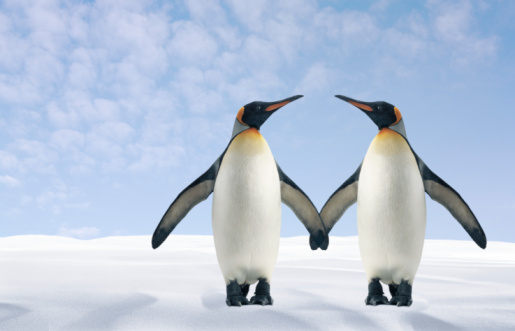
In zoos around 1 in 5 pairs of king penguins are of the same sex. The record is held by orange fronted parakeets, where roughly half of all pairs in captivity are of the same sex. Some homosexual pairing in the animal kingdom may be brief; others mate for life. Do such animals annul the Creator’s design? Obviously not. If we believe in the vast creative act of God, then these animals are part of it. They are part of His world, part of His divine plan. Just because it’s not the predominant way that animals mate doesn’t mean that such behaviour does not exist and is morally wrong, objectionable or disordered. It just means that it is atypical, nothing more. Clearly, there is far more homosexuality in the animal kingdom than anyone ever believed and we are understanding this more and more as science continues to investigate this phenomenon. It is essential that anyone who argues against homosexuality based on false notions that it is against nature should be strongly challenged” (177-78).

And challenge I am doing.

It is demonstrably untrue that homosexuality does not occur in the natural world outside humans. It is manifestly present and it would appear, not as a rarity but in abundance. Because homosexuality is found throughout the animal kingdom, the ‘animal model’, ie., nature minus humans, which suggests that only such a view characterises what is natural, cannot be sustained if you argue that homosexuality is unnatural. You cannot have it both ways.

Boswell makes a rather refined point here. He adds that many animals actually engage in activity that is unique to their species, but no-one assumes that this is unnatural. On the contrary, it is regarded as being part of that species’ ‘nature’ and is useful to biologists and naturalists as a distinguishing feature. Thus if humans hypothetically were the only species to exhibit homosexual behaviour, this would not be grounds for considering it unnatural but grounds for distinguishing its taxonomy biologically, behaviourally and emotionally. In fact, most of the behaviour that is exhibited by humans is unique to humanity and is respected because it is unique, eg., literacy, numeracy and language acquisition.

Please go to It's Not Natural (Part 2) to continue.