Showing posts with label Gay. Show all posts

Sunday, 19 January 2014

Death, Dogma and The Nazis


On Christmas Day 2011 at about six o’clock in the evening, my mother and I held my unconscious father as he took his last breaths. He passed away after a week of lying unfed and unconscious. He was 84. I had never seen anyone die in front of me before, let alone someone in my arms, let alone my own father. It was a life-changing moment and in that moment, I had an epiphany.


Death

For the entirety of his life, my father remained a committed Catholic. When people in their droves abandoned the church in the 1970s and 80s, my father hung in there and persisted in his attendance at Mass and his observance of the various Catholic rituals that pepper the liturgical year. Against the current of the time, he continued in his faith according to its Catholic traditions despite his four sons and many of his friends abandoning church allegiance and a Catholic worldview. Yet he continued to assist his local parish in their accounting procedures and to be a regular reader of the lesson at Mass. He prayed, he participated in the Eucharist, he worshipped weekly, he enacted his faith to the best of his ability over the course of his life.

I held my father's hand
Yet at his death, there was no observable sign of the church nor any observable symbols of religion. There was no priest, there were no nuns, no religious, no praying, no singing, no hymns, no rosaries, no incense, no Bible, no ostensible sign of the church at all. There was just my mother and me. His wife and companion of 63 years, and his third son, a gay man and his partner, another gay man who held his feet at the foot of the bed. To any objective observer or passer-by, there was no sign of religion in that room. No-one could have looked in and mistaken what was happening for any kind of religious ritual or ceremony. Further, all the beliefs about religious or faith issues were not present, neither in my father nor in me. Not a single church rule or rubric, not a single Biblical debate entered my mind. 

But there was love in that room. Love held him tight. Love caressed him. Love’s tears fell upon him. Love was spoken. Love let him go to end his suffering. If love was light, then the room would have been suffused in a beautiful gentle sunset light. Powerful, deep, profound love that enveloped him and us.

During my over 30 years as a Christian, I have heard every conceivable debate over what’s right and what’s wrong, what is correct thinking and what is not, what is truth and what is heresy, what is acceptable behaviour and what is unacceptable so that now, in my 54th year, and with the memory of that room and that moment seared into my mind forever, I have come to a very different conclusion about so-called orthodoxy and doctrine, what the Christian life is, and more generally, what life is all about. For, when it comes down to it, we all leave this world inevitably, sometimes peacefully and beautifully, but as often as not, painfully, messily and in an undignified manner. What matters at that moment is all important.

What matters at that moment is not what your beliefs are but your life. What matters is whether you’ve lived and loved and grown. And it’s the same for everybody, Christian and non-Christian alike. Have you lived, loved and grown?

Dogma

In the Christian world, we have centralised beliefs to the place of apex. And we have done so to the detriment of understanding our humanity. If incarnational Christianity means anything at all, then it focuses on our humanity, what it means to be human, and how this messy and often difficult life all hangs together. What doesn’t matter is a set of precepts that I might have adhered to, some set of beliefs about God, the cosmos, humanity and the church, or God forbid, church governance. Let me spell this out because it links directly to the nub of why I am writing this post.

At my father’s passing, it didn’t matter which side he came down on in his attitudes to:
  •         Infant baptism vs believer’s baptism
  •         Reformation models of Scripture Alone vs Catholic models of Church Tradition as handed down by the teaching Magisterium
  •          Biblical inerrancy vs the presence of Biblical inconsistency
  •          Whether he had had the Sacrament of Reconciliation (Confession)
  •          Whether he had had the sacrament of Confirmation
  •          Whether the Gifts of the Holy Spirit ended in New Testament times vs they are available today
  •          Whether miracles happen today
  •          Whether sex before marriage is a sinful act vs it can be explained in today’s world via modern mechanisms of thought
  •          Whether the Eucharist is best modelled by transubstantiation vs consubstantiation vs it is symbolic/emblematic
  •          Whether the Bible is the Word of God vs it is the Word about God
  •          Whether women should be allowed to be priests vs they should not be allowed to speak in church at all
  •          Whether Jesus is God vs whether he was a God-filled man
  •          Whether God intervenes in this world supernaturally vs we are alone to make of this world what we can with God's grace
  •          Whether suffering is a result of ‘the fall’ vs it is part of the human condition and always would have been
  •          Whether God’s salvific creative act is for everyone and all creation vs it is only for those who say a special prayer to activate it in their lives otherwise they’re not in
  •          Whether Jesus died on the cross for our sins vs he died because of our sins
  •          Whether Jesus physically rose from the grave as a re-animated formerly dead human being vs he was some kind of spirit vs the whole thing was a story to assist in understanding the nature of Jesus as Christ
  •          Whether in a proposed afterlife, we keep our consciousness vs we lose it
  •          Whether heaven or hell exists
  •          Whether Christians can be oppressed by a demon
  •          Whether demons or devils exist


AND I COULD GO ON AND ON AND ON AND ON


For over thirty years, I have heard various groups within the church all argue these and a hundred other issues out as though they are the crux of what it means to be human and Christian. And each is convinced that they have the truth of it and that others are in error. The truth or error of a particular belief has become the most import thing. It is as though humanity has been high-jacked by the orthodoxy police so that you have to believe certain ‘facts’ before you can be counted as a true Christian. And of course the ones who do the counting are the same ones who set the rules as to which precepts you have to believe.

As I looked at my father’s closed eyes and watched him draw his last four breaths, I had an epiphany. 

None of this stuff matters. 

We waste our lives and our energies and our thoughts and our behaviour on all this. We squander our precious time on all this religious fluff as though this is what God wakes up and thinks about every morning. Yes, it might be interesting academically. But even there, I think there are far more important things we Christians need to be concerning ourselves with regarding the centrality of our faith. But our transposal of the important stuff that Jesus was actually into over to the side, to the periphery, and putting in its place all this doctrine and dogma as though these are the central questions is I think to miss the point entirely.

Look at Jesus. He lived his entire public life breaking social and religious rules and conventions. He actually taught against having this kind of spirituality. He couldn’t be bothered with it at all. His words, recounted in the Gospel of Matthew where he is taking apart the Pharisees, echo down through the ages to today. “Blind guides! You strain your water so you won’t accidentally swallow a gnat, but you swallow a camel! (23: 24).” These words are powerful, pointed, unswerving and non-negotiable. He isn’t remotely interested in religious fastidiousness as a way of life and repudiates such religion as being blind and selfish and part of a spirituality that he deems bankrupt and illegitimate. He rejects any idea that the Realm of God is made up of one set of orthodox precepts that you have to believe or you’re not in. When the Pharisees, the religious show-ponies and pedants of his social sphere, asked him a trick question to see if he had ‘the right answer’ about the greatest commandment, he answered with love at the centre of the response, not some belief or religious precept or ritual. "You shall love the Lord your God with all your heart, and with all your soul, and with all your mind. This is the great and foremost commandment. The second is like it, 'You shall love your neighbour as yourself” (Matt. 22: 37-38).

What my father’s death gave me was a profound moment in time where I could put just a few pieces of life’s puzzle together to make some sense of it all. It is that our lives are what counts – whether we have lived, loved and grown, not whether we have recited a sinners’ prayer or gone to Mass or attended synagogue or mosque or believed certain principles. It is our lives. God loves us whether we make his presence conscious in our lives or not. There is nothing that can change that. For those of us who do choose to make God’s presence conscious in our lives, then the whole thing can be summarised as our relationship with God and our relationship with each other. The prophet Micah put it this way, very much on the Jesus side of things. In answering the question: ‘what DOES the Lord require of us as human beings?’ His answer is as simple as it is timeless and beautiful. ‘To do justly, to love mercy, and to walk humbly with your God’ (6: 8). That’s it. 

Be just and honest in your dealings with your fellow human beings, love mercy and compassion and look after your neighbour, and love God and be conscious of his Spirit in your life and in the lives of all those around you. How stunningly beautiful. Gamaliel, the famous rabbi who was Jesus’ contemporary answered the same question that Jesus was asked and he gave the same answer, after which he said, “and the rest is commentary”. If you read the Gospels, you will see for yourself that Jesus spells this out time and time again in virtually every teaching and example of his life.

Stanford Prison Experiment
Unswerving commitment to dogma, doctrine and ‘our view of orthodoxy’ has gotten the church and the world into all sorts of difficulties and has impoverished it to its roots. The church has so often completely missed the boat by making central the things that Jesus considered the most unimportant. Where humanity is forgotten, the value and dignity of every person, individuals and groups are depersonalised and violence ensues. Stanley Milgram’s electrification experiment and Philip Zimbardo’s Stanford Prison Experiment both stand testament to the atrocities that good human beings can commit when following orthodox belief blindly and unquestioningly. It explains the My Lai massacre. It explains the Abu Ghraib torture. It explains religious terrorism across the centuries and in our own day.

Unswerving commitment to dogma in the hands of the Christian church saw the Catholic Church in 1415 burn John Hus at the stake over his dissent from understanding the church itself and the Eucharist. Countless thousands died at the hands of the Church which believed it was doing God’s will according to its understanding.

And the Reformers were not blameless either. In 1541, perhaps the most famous reformer of them all next to Luther, John Calvin, returned to Geneva and set up a harsh and austere theocracy that brooked no dissent. He co-opted the secular authorities and interfered in the private lives of Geneva’s citizens according to his own understanding of things. And Calvin was no merry-man life of the party kind of guy. He ruthlessly quashed anything remotely joyous and any semblance of gaiety as being hindrances to the work of God. His inability to discuss issues in what we would term a collegial and civil manner saw him in 1553 acquiesce to having Michael Servetus burned at the stake over what looks like a theological rivalry turned murderous. 


 Abu Ghraib Prison Iraq
Make no mistake, blind, unquestioning, unswerving commitment to dogma, whether religious or political, typically becomes aggressive and violent. And it does not have to be physical violence alone that counts as violence. Examples of psychological and emotional violence perpetrated upon people by Christian dogmatic loyalists are numberless. People have been screwed over by dogmatists for centuries with immeasurable turmoil created in lives. Churches still hurt people today; regularly.


Gay people have particularly been at the receiving end of ‘orthodox’ belief about human sexuality and certain Bible verses and Biblical interpretation. As a result, we have been pilloried and persecuted by the church and by societies for centuries. 

Doctrine and dogma will have us as:
  •         Intrinsically disordered
  •         Inclined to moral evil
  •         An abomination
  •         Sinners
  •         Perverts
  •         Degraded
  •         Shameful
  •         Weak-minded
  •         Sick
  •         Deviant
  •         Psycho-pathological

Nigerian president President Goodluck Jonathon
Photograph Matt Dunham/AP The Guardian
I write this blog-post because I see dogma again today turning aggressive and violent. India has recriminalised homosexuality. Russia goes on an aggressive and often vigilante-driven hate of gay people under the embarrassing ignorance of not propagandising children. And Africa has gone further. There are deaths. Nigeria passes a law that sees gay relationships and memberships of clubs or organisations punishable by ten years imprisonment and fourteen years for a marriage. The President, Goodluck Jonathon’s spokesperson, said, “This is a law that is in line with the people's cultural and religious inclination. So it is a law that is a reflection of the beliefs and orientation of Nigerian people … Nigerians are pleased with it." 

Roger Jean-Claude Mbede from Cameroon was arrested and imprisoned for three years for sending the text message: "I am very much in love with you" to another man. He was permitted to go to hospital for treatment on a hernia recently but his family removed him from the hospital one month ago saying that he was "a curse for them" and that authorities should let him die. Roger died on or around 10th January 2014.


Political masters using Christianity to deny human rights is an abomination and is an indictment on the church itself for being so ambiguous as to let these men say what they say and behave as they do in Christ's name. Their forebears in South Africa used dogma and doctrine and the Bible to pronounce that apartheid was good and fitting and God’s natural way. The American slavers and those who benefited from their actions likewise used dogma and doctrine and the Bible to enslave tens of thousands of people and to pronounce that it too was good and right and fitting and God’s natural way.

As a Christian, I am no saint. I have all sorts of questions that do not have ready answers. There are things about the Christian life that do not make sense to me. There are elements of orthodoxy from both my Catholic and evangelical roots that I no longer believe. I do have a faith albeit a very human faith. It is honest and enquiring. Doubt is part of it. I do not understand God. I don't think anyone does or can. There are those out there who value orthodoxy above all else who would deem me a heretic. It wouldn’t be the first time I have been called one, as some very loving Christians ascribed that epithet to me when I came out as a gay man. But, it doesn't matter. I am not using the same model as they use. We look though different prisms now. From our records of him, I know what Jesus was like and that he rejected the domination systems of this world where the more powerful lord it over the weaker, that he loved compassion and that he gave what is probably the greatest teaching on treating our fellow human beings that has ever existed. I also know what kind of spirituality he didn’t like. He made it quite plain. And I know that he spoke of God as a relational God whose nature is love. That is enough for me. The rest, to channel Gamaliel, is commentary, and I don’t think it matters.

When my father died in that moment, it was his life that counted, not his set of religious or political beliefs. At that moment, all that fell away. I believe that it will be the same for me and for you too.

The Nazis

There is a light-hearted meme that says the first person to mention the Nazis in a disagreement or argument loses the battle. It is based on the notion that since the Nazis were so extreme, so cruel and calculated as to be inhuman, no modern day comparison can be legitimate. The problem with that scenario is that it exculpates us from similar monstrous behaviour were we to be put into similar conditions as those of the German soldiers of the Third Reich. If you don’t believe me, Google the two experiments I touched on above. We like to think of the Nazis as being beneath human. Not us. But the Nazis were very human. They were not only not beyond what humans are capable of when belief goes awry and dogma is made king, but they enacted their barbarism through very human thinking, logic, emotion and behaviour. Yes, there was tribalism of the worst kind, a nationalistic fervour that saw the Aryan race as superior to all others but it was this unshakeable belief in this precept that was the driving force behind the Final Solution with all of its violence, dehumanisation and cruelty. 

I end this blog-post which is essentially a warning against a top-down spiritual orthodoxy based on unalterable doctrine and dogma with a clip from Professor Jacob Bronowski. This scientist and polymath intellectual of the twentieth century made a thirteen-part documentary that was first aired in 1973. It was called ‘The Ascent of Man’ and with long unscripted ‘talking head’ sequences but wonderful location shots, it was not expected to do all that well. However, it was ranked 63rd in the top 100 television shows ever made.

In one of the final parts of The Ascent of Man, Professor Bronowski visits Auschwitz where he had lost members of his family. He agreed to go there provided that there would be one camera, one take and one scene with him. He ended up by a pond where the remains of people’s ashes had been pumped; and very likely, those of some of his family members. As he stood there, his daughter tells, his prized crocodile shoes began to sink into the mud surrounding the pond and get covered in water, so Bronowski simply walked out into the pond and standing in the water, gave what is one of the great speeches, and all the more for its unscripted nature, against the violence that is always inherent in dogma and orthodoxy and the need for humanity to continue to keep questioning, to keep searching through science and an enquiring mind. It is very powerful. The words spoken as they are in that particular pond by this particular man should have us wary and skeptical about dogma forever.

So, if you’re going to be a person of faith, any faith, then please, act justly, love mercy and compassion and above all, walk HUMBLY with your God.


 Professor Jacob Bronowski in Auschwitz 
 The Ascent of Man


Pax et Amor - Stuart   


Wednesday, 31 July 2013

Pope Francis and the Gays


It has been widely reported that Pope Francis on the plane going back to Rome after his successful trip to Rio de Janeiro departed from the traditional Catholic script regarding gay people. 
What did he actually say? And what does it mean?

We’ve had a few days to consider this occasion, if you can call it an occasion, so I would like to offer some analysis for what it’s worth.


Some background 

The Vatican was rocked on Pope Benedict XVI’s resignation after it was made public that he had left the as then unelected new Pope a dossier. I understand that the dossier contained reports inter alia about the clerical sexual abuse crisis in the Catholic Church. The dossier also contained suggestions that there was a ‘gay lobby’ of several priests working in the Vatican who were regularly in violation of their celibacy vows and who protected one another. It was about this so-called gay lobby that the Pope was specifically asked on the plane.


The scene 

I think it is worth noting that Pope Francis’ over one hour interview with extemporaneous responses to any questions whatsoever has probably never happened before in the history of the papacy. That this man was prepared to just stand there leaning on an airline seat while the reporters in front of him all sat while answering their questions honestly and forthrightly is not to be undervalued. 


Popes do not do this kind of thing. It is the equivalent of Queen Elizabeth II doing an impromptu interview with the world’s media for over an hour where they could ask her anything they wanted to, no holds barred. And as you probably know, the Queen does not do interviews. Neither do Popes, or at least not outside carefully stage-managed audiences in the vast audience hall of the Vatican where questions are vetted and the Pope knows ahead of time what he is going to be asked. So this is more than just a change of style. This is a message. 

It’s about how Francis wants his pontificate to be and how he wants it to look. For me, it is like opening a window and just letting the fresh air flow and yes, it does remind me of the commentary about Pope John XXIII calling the Second Vatican Council because he wanted to ‘open the windows’ of the church. There is something here akin to that spirit. 

Francis seems to want a more proximal church, less distant, a more brotherly church, less monarchical, a more humble church, less pompous. The fact that he obviously gave the reporters permission to ask anything they wanted to is also something quite extraordinary. There would be no censorship here, at least in the questioning. There would be true and healthy freedom of the press doing what it does best, asking the important questions. And Francis to his credit, was cool with that. 

So for me, I think this a huge step in the right direction for a calcified, ossified, secretive, snail-paced, frightened church.


The gay question

One of the reporters asked the Pope directly about the gay lobby, so Francis in his answer was talking specifically about a group of gay priests working within the Vatican. 

He said, "When I meet a gay person, I have to distinguish between their being gay and being part of a lobby. If they accept the Lord and have goodwill, who am I to judge them? They shouldn't be marginalized. The tendency is not the problem. They're our brothers." 

Now I do think it is important here to understand that he was talking about gay priests, not just gay people in general. What he says about them though is radically different from what BXVI had to say, not only in those horrendous documents that he wrote while he was Prefect of the CDF which I treat in some detail in the book, but also in Benedict’s ruling in the mid 2000s that all seminaries should be cleaned out of young gay men and that gay people should not be permitted to join the priesthood. By any objective test, Francis’ words here are a departure from that ethos. 

He says:
1. I am prepared in my own mind to distinguish or think differently between a gay priest and a gay activist lobby;
2. He asks quite humbly I would suggest, “Who am I to judge that man?”
3. He shouldn’t be marginalised, ie., cut off, ostracised, punished, impeded;
4. His orientation - Francis uses the official church word “tendency” – to gay sexuality is not the problem;
5. He is our brother

This is something different from the Ratzinger/BXVI pronouncements. You may not think it much, but for the Catholic Church and a reigning Pope, this is a lot, especially given his immediate predecessor from whom he is departing, at least in focus, is still alive and living next door. What he says here does give me some small hope that a degree of change might be in the air. I think it will not be a change of teaching any time soon. I think it will start off as a change of focus and manner. It’s not much, but it’s a start, which means we are better off than where we were this time last year.

This is a conciliatory statement. It lacks the harsh pomposity of the ‘we are right you are wrong and no discussion will be entered into’ declarations of the preceding two pontificates. There is a softness here that I have not heard from the Catholic Church on matters gay, not just in my lifetime, but ever.
Francis does not seem to be concerned too much that the hypothetical priest is gay. His sexuality is not the problem. He is more worried about gay activism within the Vatican. Now while I have no problem with gay activism within the Vatican, I can understand that the Roman curia might be scared out of their minds that such a thing might exist. Whether it does or not, I have no idea. Rather, Francis appears to be accepting of the idea that this priest is gay and he is not bothered by that fact alone at all. 

Friends, no matter how much I think the Catholic Church has caused harm over LGBT issues, I am prepared to say that this is a positive step, just one little one, but a step nonetheless.


Francis' question

In his question, “who am I to judge?”, the Pope seems to me to be adhering to what many of us have called for over the years in asking other Christians to stop judging us and finding us wanting. Francis phrases it more gently, but that is the intent that I take from his words.

However, at another level, I do want him to judge. I want him and the whole Catholic Church to judge that we are all God’s children and that gay people are part of God’s vast creative act and that we are valued and esteemed by God as much as any straight person. I want that judgment. I want that evaluation to be made and to be taught. I want the Church to take a lead here to shine a light for the whole world, to lead by example in this issue and to show the love and compassion of our God here in this world to gay people. On that singular flight back to Rome, Francis also made it clear that there is no place for homophobia either generally in the world or in the Church. But I also want the Church to judge itself over its traditional teachings on gay sexuality and to find a mechanism by which it can re-visit the teachings and change them. I want those judgments to be made too.

Pope Francis is still in the earliest days of his pontificate. I hope that he will continue to speak differently to the words of his predecessors. As an interesting point and probably another message to those around him, he is the first Pope to use the word ‘gay’ instead of ‘homosexual.’ He has accepted the cultural change and has eschewed the medico-legal term, another important departure. This departure concept is vitally important in understanding Catholic theology because the Church prides itself on continuity from the words of Jesus right down to the present day; so any departure is actually a really big deal. The reactionary Cardinal Dolan in the United sates has already come out and said that Francis was not departing from the doctrines of the Church and that homosexuality is still a sin etc etc etc, but I think he is wrong; a first step has been taken. 

I do not know whether Pope Francis wants to or can manage to re-visit the Church’s teachings but I hope that somewhere over the next few years he does. I will continue to speak out against the Church’s teachings as they are now as I think all gay Christians should do if they are able, but I also want to have a good conversation with the Church because I know there are so many within it who think and feel as we do, both straight and gay. Pope Francis’ recent words give me pause for hope.


Pax et Amor - Stuart


Thursday, 11 July 2013

BGBC Book Launch and Celebration

On Friday 26 April 2013, the Adamstown Uniting Church in Newcastle Australia hosted an evening to celebrate my book 

Being Gay Being Christian


The evening was a wonderful night with almost 100 people coming along to show appreciation, to celebrate the book and to gather with like-minded others to discuss the issues raised. There were people present from all walks of life: gay, straight, Christian, atheist, Catholic, Protestant, evangelical, pentecostal, partnered, single, young, old, laity and clergy. Among the clergy, we had Anglican priests and ordinands, Uniting Church ministers, Catholic priests and nuns and even the local Catholic Bishop. What an extraordinary mix of people, all interested, all talking, all sharing, all laughing, all friendly. We had the chance to eat some canapes and drink a glass of wine beforehand for about half an hour which set up such a convivial atmosphere that by the time we sat down for the official part of the evening, we were all acquainted and feeling very positive about the evening to come. By the time we got proceedings started, I could feel the very real love among us all as brothers and sisters.

The evening was recorded but unfortunately, we were not able to film, but below you can hear the various segments and watch a slide-show to accompany each. I list them below in the order of the evening's proceedings. We certainly had some great laughs and I got to share a little bit about faith and sexuality in the church. You can listen all the way through or come back a few times to hear the various parts. Either way, I do hope you enjoy the evening.

And one last thank you: thank you too for your support in reading this book and in coming back to this blog. After one year now, I do think the book has been very helpful to a lot of people so I hope it will have a long life. If you have found it helpful, I would love you to recommend it to others so that the word gets out there to everyone who needs to hear:

being Gay being Christian - you can be both


1. Welcome - Rev. Dr Rod Patteneden  
    Minister, Adamstown Uniting Church (4.16 mins)


2. Greg Archer speaks to the gathering as a reader of the book. He shares his own remarkable story and how BGBC became a part of that story (11.20 mins)


3. Rev. Dr Rod Pattenden welcomes Stuart to share (0.35 secs)


4). In this video, I go through some of the media coverage of the book. It's a lot of fun (23.00 mins)


5). This is the occasional address. In this video, I offer some remarks about gay sexuality, faith and the church. As part of this slide show, I include some images close to the beginning of the set of elephant tv where I shot a documentary in 2012 on Same Sex Marriage in Auckland New Zealand and also some shots in the green room at NZ TV where I appeared on the Breakfast show. (20.44 mins)


6). This final video is a brief Q & A after the main address. Erratum - In this Q & A I made the mistake of saying that this year is the 30th anniversary of homosexuality being removed from the DSM (the Psychiatrist's book of mental disorders) - I meant to say the 40th anniversary. (18.03 mins)


Pax et Amor - Stuart

Sunday, 9 December 2012

It's Not Natural (Part 2)


The Idealistic View

The second view of nature can be called the idealistic view. There is some overlap with the realistic view in that it too encompasses nature as ‘all physical things’ as well as ‘the non-human’, but there is one important difference.


The idealistic view presupposes and explicitly states that nature is good. 


It holds that:


  • while some things may be of a sad or distressing nature, and while some things can even be thought of as being ‘evil’, they are still said to be natural in that there will a good in the long run, in the grander scheme of things;
  • thus, things are unnatural when they are truly evil and there is no good in the present or the future, since nature could not produce evil on its own.

This view of nature or ‘natural’ is strongly conditioned by observation of the real world, but is ultimately conditioned by cultural values and practice including ecclesiastical values. This is particularly the case in the negative form – unnatural – where such an epithet is a vehement alternate word for ‘bad’ or ‘unacceptable.’

“Behaviour which is ideologically so alien or personally so disgusting to those affected by ‘ideal nature’ that it appears to have no redeeming qualities whatever will be labelled ‘unnatural,’ regardless of whether it occurs in (‘real’) nature never or often, or among humans or lower animals, because it will be assumed that a ‘good’ nature could not under any circumstances have produced it” (Boswell, p13).

Thus it is not surprising that adversaries frequently characterise gay sexuality as being unnatural when in reality, they merely object to it on religious, ideological or cultural grounds.


Gay Sexuality and The Idealistic View


Here are some ideas from Boswell.

  • The ‘idealised’ model of what is natural took hold in the very early Christian centuries and the ‘realistic’ model was eschewed or ignored. Thus, the idea that homosexuality was unnatural took root and may have been started by a chance remark of Plato in his Laws, in which he describes it as para physin, traditionally translated as ‘against nature’ but more probably translated in Plato as ‘unrelated to birth’, ‘non-procreative’, as all his earlier works discuss sexual desire as almost exclusively homosexual without the epithet ‘unnatural’.
  • The idealised notion that what is outside of nature is unnatural became the touchstone of human ethics for the first few centuries after Christ and thus any sexual activity that was non-procreative was deemed unnatural;
  • However, this view fell into disfavour after only a few hundred years, but was revived by the Scholastics in the 13th century. 

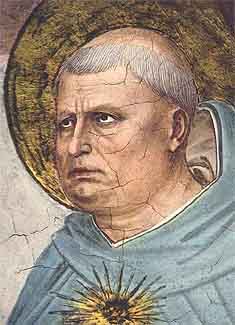
St Thomas Aquinas
the most famous Scholastic of them all
The Scholastics were a branch of theology and philosophy that grew out of early monasticism and was influential from the eleventh to the fifteenth centuries. It espoused dialectical reasoning and used logical inference to defend Christian dogma and to counter contradictions and arguments. Thus the ‘idealistic view’ came to be a decisive and controlling explanatory device that premised all branches of learning from the technical sciences to dogmatic theology. God has given us nature to teach us. Nature is his His creation. It is therefore good. That which humanity offers is lesser and can be seen as unnatural.

In the twenty first century, this view has been discarded by science and philosophy long long ago. It has been utterly rejected in almost all spheres of life. 

We regularly and frequently do things that would be deemed unnatural according to this view. For example, we fly on aircraft, we sail in ships, we drive in cars, we comb and wash our hair, we shower, we shave, we cook our food, we clean our teeth, we eat special food on special days like Christmas, we grow flowers and plants indoors, we dye fabrics different colours, we practise birth control. Not one of these things among the thousands of others that I have not mentioned belong in the ‘natural world;’ they are all unnatural in this sense. Yet the power of the idealistic view is brought to full force against gay people on the erroneous assumption that homosexuality does not occur in nature. This stigma is just intellectual laziness and emotional blackmail couched in the language of philosophy but drowning in inconsistency.

“Although the idea that gay people are ‘violating nature’ predates by as much as two millennia the rise of modern science and is based on concepts wholly alien to it, many people unthinkingly transfer the ancient prejudice to an imagined scientific frame of reference, without recognizing the extreme contradictions involved, and conclude that homosexual behaviour violates the ‘nature’ described by modern scientists rather than the ‘nature’ idealised by ancient philosophers” (Boswell, p15).

The use of the idealistic view to denigrate homosexuality as being unnatural (and therefore immoral) is nothing more than a powerfully derogatory label based on “historically sanctioned prejudices and ill-informed ideas about ‘nature’” (Boswell, p15).

Please don’t miss this point.  Gay sexuality does not violate nature in any way. It violates only an idealised view of nature by ancient philosophers.


A Scientific Understanding of Gay Sexuality

Again, allow me to go the modern understanding of gay sexuality, based on biology, genetics and psychology; in effect, the nuts and bolts of the first half of Being Gay Being Christian. 

Human sexual orientation consists of two dominant orientations: heterosexual and homosexual. The former is about 95% of the population while the latter is about 5% of the population. Thus, gay sexuality represents statistically about 1 in 20 people. Gay sexuality has been identified in every society and culture on earth without exception so the anthropologists tell us and has been identified back as far as human records go, so the historians tell us. 


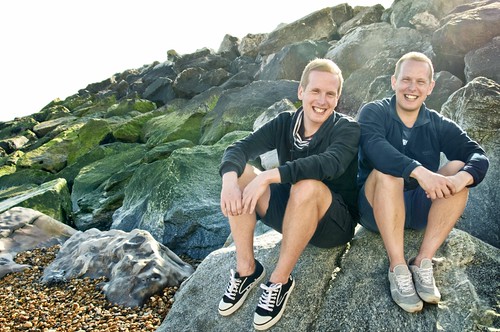
Identical twins Mat and Jon Price of Proud2Be Project
We know that sexual orientation is largely genetically determined; not 100% but substantially. Studies to date show that for men, the genetic component is somewhere between 31 and 74%, probably closer to the larger figure, and for women, around 50-60%. Genetic studies show that in monozygotic twins (identical), which share 100% of genetic material, the concordance rate of having a gay twin if there is already one of them gay is about 52% for men and about 48% for women, compared to 5% in the general population; a dizzying increase. In dizygotic (fraternal) twins, which share 50% of genetic material, the concordance rate is about 22% for men and 16% for women, still way above the 5% figure for the general population. 

Both psychology and medicine have not been able to identify any signal for illness, pathology, psychopathology or proclivity to becoming ill in the future as a result of being gay. A gay sexuality is characterised as being a completely normal and consistent variation in the phenomenology of human sexuality by modern science and this is not controversial.

Let no-one say that being gay is unnatural. Let no-one say that a gay sexuality goes against nature. On the contrary, it is very much a part of the natural world for human beings.


Theological Traditions

Let’s now take a brief look at some of the history in the early church regarding the philosophy of natural law.

In so far as the Gospels are believed to be an accurate account of the words of Jesus, given that the earliest of the Gospels was probably written about 40 years after his life and ministry, there is no record in any of them of Jesus uttering a word about ‘nature.’ He does talk about storms and the birds and the trees and the fields and various elements of the natural world, but this is not the same thing as the category ‘nature’ as we are using it here.


Paul’s writings did not refer to nature in the abstract. For him, it was always used in the sense of ‘the nature of something’ eg. the Jews, the gentiles, the pagan gods. In Being Gay Being Christian, I discussed the use of the term para physin in the Book of Romans where Paul is talking about homogenital activity, usually, and language scholars would say erroneously, translated as against nature. But we have seen that Paul uses the word much in the same vein as does Plato meaning standard, typical, ordinary, characteristic, expected. Thus, para physin is better translated as ‘beyond what is usual,’ or ‘beside what is ordinary or expected’. A really good translation encompassing both words para and physin would be unexpectedly or uncharacteristically or atypically. It is does not carry the meaning of unnatural as characterised in the idealistic view.

In the epistles of Peter and Jude, the ‘natural’ is actually set in opposition to the righteous, completely going against the model that says the natural can only be good.

The early years of the Christian church were heavily influenced by Platonic and Aristotelian models of ‘ideal nature’ where Platonists viewed nature as either explicitly or implicitly a semi-divine force that transformed the ‘ideal’ into the ‘real’. They considered its dictates to have the force of moral law, as we have been discussing. Greek enculturated Jews took this idealised nature as being the earthly reflection of the will of God.

But once again, more inconsistencies, even for the people of the ancient world. For example, it was known that animals (the natural world) did have incest. Fathers were known to mount female offspring, so it was not a uniform and fully explanatory model, as obviously incest was roundly repudiated. Platonic and other non-Christian models of nature served to ensure that early Christian thinking had no place for real nature. However, ideal nature while being the dominant model for the first few centuries, which included Augustine and the early church fathers (the Patristic period), eventually fell away not to rise again until the Scholastics began to champion it. 

In the ancient world, the primary duty of a man was to reproduce in order to provide an heir for land and property. Thus, Christians found it difficult to reconcile such a pervasive value with what they were being told were the demands of Christ and the apostles, eg., the championing of celibacy. The New Testament taught that celibacy was the highest response to human eroticism. Paradoxically, not only was there no Scriptural imperative to procreate in the New Testament, it was considered morally superior not to. It did not make sense. Yet at exactly the same time, both masturbation and homosexuality were deemed equally unnatural as was failure to divorce a barren woman, all on the same grounds.


St Augustine (354 – 430CE) considered intercourse within marriage for any other reason than for procreation to be inherently sinful. This is so far out of our way of understanding human sexuality today that it is hard for us to accept that this great man believed such nonsense. He actually instructed Christian women to have their husbands perform non-procreative sexual acts with prostitutes if they found it absolutely necessary rather than sullying the marriage bed with such base conduct; for us today, completely risible, incredible and intolerable.

In his writings, Augustine was ultimately unconcerned with nature; much more with grace. Although he uses phrases like ‘the natural use’ and ‘against nature’, his use of the word focused on concepts of something being ‘normal’, ‘characteristic’ or ‘native’, more in line with Paul’s use of the word and the category. Homosexuality, being relatively unfamiliar to him, is thus seen as incongruous and contrary to human custom. 

In the Patristic period, Boswell states that objections by theologians to homosexuality were based more on non-conformity to gender expectations than to appeals to nature, ie., a man be mounted by another man would be a counter-cultural act rather than an unnatural act. In the west in the post-Patristic period, ‘ideal nature’ is absent from any serious theological works and has been considered to be unrelated or even in opposition to Christian moral issues. 


Conclusion

The harm that has been caused the LGBT community because of the argument of natural law espoused over the centuries has been incalculable. Before the rise of modern evangelical fundamentalism only one hundred or so years ago, the dominant argument against homosexuality was that it was contra naturam – para physin – against nature. And this philosophy has leeched its way across history and into our everyday thinking right out of the Latin declarations in Rome whence it was first made. To this day, many everyday people still think that being gay is unnatural. The Catholic Church needs to look at its teachings and doctrines again. There are many people within its folds who have called and continue to call for such a review. Its teachings on human sexuality which officialdom believes are in keeping with the Gospel go where the Gospel does not go and trample upon the lives of good people both gay and straight and encumber them with burdens that are unnecessary and untrue.

In the twenty-first century having come through the Enlightenment and the acceptance of a scientific approach to knowledge, we have achieved a superior understanding of how human beings are “fearfully and wonderfully made” to that of the first few centuries of the Christian era and the mediaeval world.

We of faith still believe in a creator God whose Spirit has never stopped creating and continues to do so in and around us. As a gay man of faith, I understand that God’s vast creative act is an act of such breath-taking diversity that we will never fully appreciate and understand all there is to know even just about this world let alone the cosmos and the realm of God’s Spirit after we leave here. Part of that incredible diversity is the wondrous creation of gay people amongst the crowning glory of creation, the human race. We are not all just cookie-cutter cut-outs; little straight ginger-bread men and women. No, we are diverse and different and wonderful. So far from being the result of a fallen sinful world where I just happened to have drawn the short straw in the game of a capricious and adolescent deity, as a gay man I believe in a loving God whose generosity of heart stretches over all the earth and to every person. 


I do not pretend to have it all worked out. There remain so many questions, but I choose to believe (that’s what faith is) in a relational God who is passionate about us all, created straight and gay, where we are all valued and loved. For me, a gay man, it is the most natural thing in the world when I care for my partner, share our lives together, hold him, kiss him or make love to him. It is not against my nature. It not against nature at all.


Being gay is the most natural thing in the world.


[1] Boswell, J. (1980). Christianity, Social Tolerance and Homosexuality: Gay people in Western Europe form the beginning of the Christian era to the fourteenth century. The University of Chicago.

Pax et Amor - Stuart

It's Not Natural (Part 1)


Introduction

We all know that certain Christians, usually fundamentalist evangelicals and pentecostals, attack the legitimacy of being a gay person because of Scripture. They pull out Leviticus and Romans faster than you can say Westboro Baptist and speedily go in for the kill, telling us that our lives are a rejection of God, that we are living in sin, that we will not inherit the Kingdom of God, and my favourite, that we are an abomination.  There’s not much love and grace here, just arrogance and judgementalism. Now, you will probably know that in my book Being Gay Being Christian, I deal with these issues and the six Bible passages that are used ferociously to deny our lives in quite some detail. I make an effort to attempt to set the Biblical record straight systematically on what it does and does not say about gay people and I do so based on modern scholarship.

But this is not the whole story of the repudiation of the gay person by the Christian church. This is actually only half of it. The other half is what I want to write about in this post - and that is about nature. There is a large and historic discourse set against the gay person based on the idea that being gay goes against nature. That everyday kind of language is not the exact language this discourse uses. Rather, it uses the more philosophical lexis of ‘natural law’, but my ‘everyday’ rendering of it gives you the idea of where we will be going as we examine these claims. Some of it I admit is a little complicated, even somewhat byzantine in parts, but it is worth examining because there is a long history here that affects all gay people and their loved ones, whether they are Christians or not. So, let’s take a look.


Who Is Saying This?

We’ll begin our examination first by looking at who exactly is saying this stuff. Who are the main perpetrators of such thinking? Who says that being gay goes against nature? The answer to this one at least is an easy one. The Roman Catholic Church has historically used the ‘natural law’ argument against the beauty and legitimacy of a gay life rather than the Scriptural argument relied on by Protestant denominations of all persuasions. 

While the Catholic Church does quote Scripture in its official teachings, it mostly relies on philosophical discourse in its approach to theological and ethical issues and uses Scripture to augment its argument or as a base from which to argue further. It is ‘high’ knowledge, educated and learn-ed thinking couched in often arcane, dense and difficult language. Believe it or not, official Catholic teaching actually comes out in Latin first and only then is it translated into the various vernaculars.  While the evangelicals appeal to the authority of the Bible, the Catholics appeal to the teaching authority of the Catholic Church which itself teaches is a Christ-given authority. They call this teaching authority the Magisterium and Catholics are taught from a very young age to accept its teachings without question. It becomes the official doctrine of the Catholic Church.

Now when I use the term Catholic Church, I really should make a distinction in the language. You see, as I argue in my book, there are really two Catholic churches: one is the official Catholic Church based in the Vatican in Rome with its powerful Magisterium and its doctrinal declarations. The second is the grass-roots Catholic Church at the local parish level in the cities and suburbs around the world. While most Catholics at the local parish level listen to the official teachings of the Church, they don’t always believe or follow those teachings to the letter. Rather, they will often follow their own heart and conscience and many may choose which teachings feel appropriate for them personally. 

The most obvious example of this is the Church’s pronouncement that the use of contraception is an immoral act. The figures suggest that in the world’s most populous Catholic country, the United States of America, 98% of fertile Catholic women ignore the teaching and use contraception yet still call themselves Catholic. While the official line is that you can’t just pick and choose what suits you, for many Catholics in the twenty-first century, that is the reality.

Now again, while some Protestant adversaries of gay sexuality do use natural law philosophy from time to time, they mostly look to Scripture, so it really is the official Catholic teaching that we’re talking about. And the Catholic Church is by far the largest Christian denomination on earth, so the ability to influence a lot of thinking is clearly apparent.


What Does It Claim?

Well, in a nutshell, there are a couple of fundamental propositions that the natural law adherents stack up one on the other. There is a long history here but I enumerate them below for you in eight short propositions first:

  1. Nature is created by God;
  2. Therefore nature is good (because God only creates that which is good);
  3. Nature reproduces (this phenomenon has been woven into the fabric of nature by God);
  4. Therefore, according to the order of nature, all sexual acts must include the possibility of reproduction;
  5. This implies that all sexual acts which exclude the possibility of reproduction are against nature and therefore against God’s order;
  6. Homosexuality is a sexual act that does not include the possibility of reproduction and is therefore against God and His order;
  7. Anything that goes against the order of God cannot be of God and can be considered immoral;
  8. Therefore homosexuality is immoral.


One way of summarising the natural law position is the aphorism:


Sex     =     Procreation


Therefore,                          Homosexuality    =    Sin


I will deal with this systematically because a lot is riding on this claim.  We’ll start with some philosophy and then move to some history.


Two Views of Nature

Over the two millennia since Jesus walked the earth, there have been two distinct views about nature: the realistic view and the idealistic view. Occasionally they overlap, and occasionally as you shall see, people have ascribed to one but when it suited them, aligned themselves to aspects of the other and just conveniently forgot to mention that they were changing camps in doing so. We'll start with the first in this post and then move onto the second in Part 2.


The Realistic View

There are three ways that the realistic view of nature is typically seen. 

1. Nature is seen as as the character or essence of something, eg. the nature of love, the nature of lions, human nature, the nature of baroque music.

‘Unnatural’ here would be seen as something uncharacteristic of the person or thing, some way that it differs from the usual.

2. Nature is seen as the composite of properties or principles of everything that exists in the universe, eg., “the laws of nature” and even in the sense of “death is part of nature.”  

‘Unnatural’ here would therefore be seen as that which is not part of the scientifically observable world, eg., ghosts or miracles.

3. Nature (or natural) is seen as something that is outside of human interference or intervention, ie., that which is not man-made. It denotes what occurs without man’s intervention, eg., not damming a river (human intervention) but allowing it to take its ‘natural’ course.

‘Unnatural’ here is seen as either: 
• characteristic only of humans as in ‘hunting for sport is unnatural (as opposed to hunting for food like the animals do); 
• or simply artificial, as in unnatural fibres or foodstuffs, eg., polyester 

The great historian of homosexuality, John Boswell (1) on whom I rely significantly in this post, reminds us that there is a cultural inconsistency here in the use of our language. He says that homosexuality, which we will see further on is wrongly argued as not occurring in nature, is deemed ‘unnatural,’ but polyester, a fibre that also does not occur in nature, is considered to be ‘non-natural;’ an altogether softer descriptor and possessing less intensity. 

It is interesting isn’t it? Why the inconsistency? ‘Unnatural’ versus ‘non-natural’; yet both holding exactly the same deemed quality of not occurring naturally in the non-human world (in this third sense). It we were consistent, we would call them both unnatural or both non-natural, but consistency alas is something that is missing in abundance from the natural law argument against gay sexuality, or to borrow Shakespeare’s gorgeous phrase, “more honoured in the breach than in the observance”. 


Animal Model

This third sense of the use of ‘nature’ is in great measure a model of its own, such has been its influence in Western thinking and has been the most common control or standard to evaluate what is natural. It could loosely be described as the ‘nature minus humans model’ or ‘animal model’, but despite its significant influence on thinking, it is fraught with difficulty on various levels when examined closely. 

It is really not possible in the twenty first century to view that which is uniquely human as less than natural or unnatural. In biological taxonomy, human beings, like sheep, cows, goats, apes, lizards and frogs, belong to the Kingdom Animalia and are as much a part of nature and what is natural as any other constituent of the animal kingdom. To consider any act or intervention of humanity as being outside the realm of the natural in fact does not make sense, ie., is illogical, and is demonstrated so. Humanity is understood by science and modernity as being part of nature (q.e.d.), not set apart from nature.

Boswell makes the following important point about how we deem something to be natural or unnatural.  He says that in reality, what is often considered natural or unnatural is entirely subjective and conceptually ambiguous when there is the presence of more than one individual. For example, two people may agree that the dyed hair of a third person looks unnatural. One person means only that it does not suit the person (in their opinion), while the other one means that dyed hair is inherently unaesthetic or undesirable.


Gay Sexuality and The Realistic View


So how does the ‘realistic view’ of nature and its evaluation of what is natural and unnatural as espoused by the church inform the arguments against gay sexuality? 

Regarding gay sexuality, the realistic view: 
a) distorts the truth of what is really happening by

  • ignoring the truths of science
  • making declarations in authoritative language that are false, and

b) is enveloped in the inconsistencies to which I alluded above.


Homosexuality Is Unnatural

There are two assumptions that underlie the belief that homosexuality is unnatural in the ‘realistic model’ as described above:
  1. The belief that any sexual behaviour that is non-reproductive is unnatural; 
  2. The belief that homosexuality does not occur anywhere else in animals other than humans.
Let’s take a look at both, the first in a series of bullet points.


The belief that any sexual behaviour that is non-reproductive is unnatural


a. Many heterosexual married people engage in sexual activity that is non-reproductive. In today’s society, this is not only considered not unnatural, but is considered to be a good and sensible thing to do in terms of the planning and management of family size;

b. Many heterosexual unmarried people engage in sexual activity that is non-reproductive. In today’s society, this is considered acceptable. There are very few virgins walking down the aisle or waiting for them at the front of the church. Such sexual activity is even thought sensible by society before undertaking a commitment to marriage;


c. Both married and unmarried heterosexual people engage in sexual activity that is actually predominantly non-reproductive. People generally enjoy their sex lives as part of the richness of partnered life that brings intimacy, erotic pleasure and fun. There are lots and lots and lots of reasons why people have sex. Procreation is only one of them. For the most part, sexual activity for consenting adults is not about procreation.

d. Many animals have an oestrus cycle when the females come ‘on heat’ and are receptive to sexual activity. Human beings do not technically go on heat and we do engage in sexual activity in non-fertile periods. This is a fact of life and has nothing to do with procreation.

e. Where heterosexual couples do have sexual activity that is reproductive, there is typically an intentionality to the act, eg., “we are trying for a baby”. In this instance, a couple is consciously and intentionally attempting for a pregnancy. In all other instances, this sense of intentionality is absent.

f. The converse is also true. In most sexual activity within a partnership, it is not only that intentionality is absent but that couples typically and actively avoid pregnancy where they are not specifically wanting to have a baby;

g. There is a clear inconsistency here too, in that historically, Western societies have encouraged and idealised celibacy, which has a clear non-reproductive outcome, as being natural. In certain parts of Scripture, celibacy is touted as the highest form of human sexuality. St Paul states that if he had his way he wished that everyone were celibate, for that was the highest sexual calling, or so he thought. If consistency were the rule, celibacy would not be lionised; it would be deemed unnatural as being non-reproductive.

h. In modern times, the practice of masturbation, another sexual activity that is non-reproductive and therefore deemed unnatural by ‘the realistic view’ is perfectly accepted as being a normal and natural part of adolescent development. It is assumed that all adolescents will masturbate frequently as the opportunity arises (no pun intended) and will continue to masturbate into adult life, whether partnered or not. As a Psychologist, I regularly have to ask about people’s masturbation activity if it is pertinent to a relationship or sexual problem. Masturbation is routine, if not always overt, and it is frequently part of a partnered relationship to some degree.

i. Masturbation is also a time-honoured and clinically proven technique used in sex therapy. One of the areas I specialise in is sexual dysfunction and I regularly receive referrals from GPs and Urologists, mostly for men, who are struggling with some dysfunction. Very often, part of sex therapy is the teaching of a regimen of masturbation eg., for erectile dysfunction and rapid ejaculation, where physical stimuli and cognitive focus have to be re-trained. This is a highly effective treatment for most patients.

These points show clearly that what is deemed unnatural by the official teaching of the church is not accepted by the vast majority of society. It is essential to see that cultural mores change over time and what is considered unacceptable in one era is deemed perfectly acceptable in another. So too, with what has been deemed natural and unnatural. There is a definite cultural aspect to this which makes a mockery of a pure ‘animal model’ of nature. 

The Catholic Church appeals to the realistic view when it suits but ignores it at other times. It forbids its people from using contraception as we discussed above based on natural law philosophy. Contraception by definition does not allow for reproductive sex so it is deemed unnatural and therefore against the order of God and therefore an immoral act. Yet by the same reasoning, its insistence that its priests remain celibate should also be deemed an unnatural act. Yet it does not do so despite it being an incredibly difficult and often soul-destroying undertaking for its men. On the contrary, it celebrates celibacy as the highest form of human sexuality despite it being non-reproductive. It conflates the body and desire with a lower form of sexuality and even historically with sin and profanity. Its priests do not have to sully themselves with base flesh and desire like the rest of humanity. Or at least that’s the official line! We know better.


The belief that homosexuality does not occur anywhere else in animals other than humans


Here is what I wrote in Being Gay Being Christian about this second false assumption.

“Why not, instead, allow that God made gay people too and that homosexuality is part of the natural order? After all, there is plenty of evidence of homosexuality in the animal kingdom. In 2006, the Natural History Museum of the University of Oslo staged an exhibition about this much ignored topic. The scientists reported the following:

Homosexuality has been observed in most vertebrate groups, and also among insects, spiders, crustaceans, octopi and parasitic worms. The phenomenon has been reported in more than 1500 animal species, and is well documented for 500 of them, but the real extent is probably much higher. The frequency of homosexuality varies from species to species. In some species, homosexuality has never been reported, while in others the entire species is bisexual.


In zoos around 1 in 5 pairs of king penguins are of the same sex. The record is held by orange fronted parakeets, where roughly half of all pairs in captivity are of the same sex. Some homosexual pairing in the animal kingdom may be brief; others mate for life. Do such animals annul the Creator’s design? Obviously not. If we believe in the vast creative act of God, then these animals are part of it. They are part of His world, part of His divine plan. Just because it’s not the predominant way that animals mate doesn’t mean that such behaviour does not exist and is morally wrong, objectionable or disordered. It just means that it is atypical, nothing more. Clearly, there is far more homosexuality in the animal kingdom than anyone ever believed and we are understanding this more and more as science continues to investigate this phenomenon. It is essential that anyone who argues against homosexuality based on false notions that it is against nature should be strongly challenged” (177-78).

And challenge I am doing.

It is demonstrably untrue that homosexuality does not occur in the natural world outside humans. It is manifestly present and it would appear, not as a rarity but in abundance. Because homosexuality is found throughout the animal kingdom, the ‘animal model’, ie., nature minus humans, which suggests that only such a view characterises what is natural, cannot be sustained if you argue that homosexuality is unnatural. You cannot have it both ways.

Boswell makes a rather refined point here. He adds that many animals actually engage in activity that is unique to their species, but no-one assumes that this is unnatural. On the contrary, it is regarded as being part of that species’ ‘nature’ and is useful to biologists and naturalists as a distinguishing feature. Thus if humans hypothetically were the only species to exhibit homosexual behaviour, this would not be grounds for considering it unnatural but grounds for distinguishing its taxonomy biologically, behaviourally and emotionally. In fact, most of the behaviour that is exhibited by humans is unique to humanity and is respected because it is unique, eg., literacy, numeracy and language acquisition.

Please go to It's Not Natural (Part 2) to continue.