Showing posts with label Sexuality. Show all posts

Sunday, 21 October 2012

New Zealand Interview and Visit

This week, I'm off to New Zealand to do some media events around the city of Auckland. How exciting and how blessed that I get to speak about some of the issues of which I am most passionate.

I will be on the support side of a debate/discussion on the topic of Same Sex Marriage which will be available for download from http://www.elephant.tv/ in the not too distant future. I will also be doing some television spots with various interviewers on the issues of the book. There will be some radio too and a magazine interview. I will be speaking at the Sunday evening service of the Metropolitan Community Church in Auckland on 28 October and at the mid-week evening meeting of the Auckland Community Church on 30 October. I am also looking forward to doing an internet interview with talk show host Andrew Whiteside on his Gay Talk Tonight show http://www.gaytalktonight.com/ 

The New Zealand people have been very welcoming well before I have even arrived and I must say I am just so impressed by how open they are to talking about these sexuality issues which, for some of them, must be quite confronting.

Below, you can find an interview I recorded a few months ago with Justin Gregory from Radio New Zealand's Spiritual Outlook program. Justin and I had a wonderful chat about all sorts of interesting issues: 


  • the church 
  • traditional teachings on gay sexuality 
  • the evangelicals 
  • the Catholics
  • my own history of suffering
  • my journey to self-acceptance and self-love
  • the reasons I wrote the book
  • the intended audience of the book
  • how I see myself these days

It was broadcast on Sunday afternoon 21 October and released on-line the same afternoon. A pastor wrote to me immediately and said:

I have just listened to the broadcast, and rather sorry I am not in Auckland to hear more from you. Your book was given to me several months ago ( a birthday present ) and I am so pleased to have it, so pleased you wrote it. The book is so very useful in my ministry. Thank you! A most excellent book that should be on every Christian minister's bookshelf.


I hope you enjoy the interview and if you find it helpful, then purchase a copy of Being Gay Being Christian if you haven't read it yet or tell someone else who might need to hear about it. Or tell them about the website: http://beinggaybeingchristian.com/ or tell them about the book's Facebook page or my own personal page. There are a lot of people out there who need to hear this message: gay people, their family, their friends, their church associates, their clergy. Let's see if we can spread some good news!


Pax et Amor - Stuart

Wednesday, 18 April 2012

Being Gay - Such A Delight (Part 3/3)

In the the third and final post of this triptych, I want to look in a very different direction to that of the first two posts. In the first, I canvassed the idea that being gay was a disappointment to parents and to society because gay people cannot on their own procreate and are ispo facto doomed to experience life in a lesser way, a way that is inferior, second-best, runner-up to straight people. In the second post, I took the idea that being gay is a disappointment further by examining the idea that gay poeple are somewhow broken straight people, heterosexuals whose identity has somehow gone off the rails, that we are deviants, because we deviate from the 'normal' path of being heterosexuals. In both these posts, I reject these ideas as being wrong, harmful and unfair in their characterisation of us; in the first, by suggesting that we are able to thrive and flourish very happily without the ability to procreate together and still live perfectly happy lives ( at least as perfectly happy as any other straight person), and in the second, by reminding us that good scholarship shows that gay people are not sick, ill or disordered and that we are not deviants at all - our sexual identity gifting us with attributes and experiences that can bring great positivity to a struggling world.

Our first two posts examined  rejected notions of disappointment. This one will look at the antithesis of disappointment - this one will look at why being gay is a delight. The etymology of the word delight shows that it comes orignally from the Latin and Middle English and has direct associations with the words: alluring, pleasing, enticing, delicious, delectable, light. All these words, except perhaps the last, describe something quite wonderful, something especially pleasurable or attractive. And the word light offers us the lovely sense of adding luminosity, elucidation, clarity. So let me speak about six factors that attest to why being gay can be a delight.


Gay people have a strong sense of family
If gay people are unconditionally accepted in their families, it is not uncommon to find a particularly strong connection made with parents and siblings. Given that gay people don't generally procreate and bring into the world another generation directly from them, some of this downward energy (to a following generation) goes across sideways and back (to siblings and parents). Where unconditinoal love is offered in a family by parents to all children regardless of sexual orientation, there is often an equality that can be quite wonderful and the envy of others. Gay people will frequently forge adult relationships with their adult parents and often also have the time and inclination to look after them when they grow older. Since gay people don't typically have children, their energy and commitment to family is quite substantial and in some cases can be demonstrably more so than straight siblings. Where does this come from? Probbaly from the years of sexual identity formation where every young gay person who wants to disclose to their parents but is fearful that they will be rejected. When that doesn't occur, there is often a world of discussion opened up a  about not only orientation issues but other issues as well leading to a growth in intimacy.


And for gay people who do have children, well you won't find more committed parents than gay people who more than likely have had to struggle to become parents in the first place. As is not the case for for straight couples sometimes, becoming parents for a gay couple is never an accident.

And finally, gay people have a huge commitment to non-biological family. Friends become resolutely firm supports and such friendships are highly valued in the gay community. Seeing friends, talking to friends, hanging out with friends are all-important to the gay person. The connections made and intimacy established and developed over time is quite something to behold. It is difficult to pinpoint  but most gay people would say that there is a difference they recognsie between the nature of relationships between gay people and straight people. In my own little family, my partner and I have a couple of very dear friends whom we consider family - part of our lives forever.

Gay people can be a challenge and an example to the world
One of the most trying things in the Western world today is the notion that big corporations or big government that has lost its way, both typically run by alpha males, is the way we do things. It has predominated the culture of the twentieth century and does not look like it's about to abate in the twenty-first. The wonderful thing about gay people is that our very lives cut across that gender status quo simply by being who we are. Gay men are not usually alpha males. Gay women are definitely not alpha males. While we can and do flourish in the world of commerce, there is a softer side to the gay guy, an absence of the 'dog eat dog' ethic that runs the world. Money comes first. People come
second. And while of course there are plenty of straight people who differ from these views in their language and action, there is a strong sense that gay people more generally revile these attitudes. Why? Probbaly because we ourselves have suffered under them, either in high school or in university or out in the workforce.

Gay men generally do have a wonderful rapport with women because in some senses, we have suffered some of the same outrages that the patriarchal systems impose on women. You see, homophobia is closely related to sexism.  Both are about a controlling and negative view and treatment of women. We gay men are well connected with our emotional lives and are quite comfortable in being engaged with a softer form of masculinity that eschews machismo, the inability to emote, or the refusal to cry. So no matter how muscled up a gay guy might be, the odds are that he's not an alpha male. Gay men get women.

And lesbians too challenge the gender order that keeps women down, keeps them in positions of subservience and inferiority, because lesbians are not only women themselves, they love women. Ellen DeGeneres is a hero of mine because she has been true to herself from the outset and has been an incredibly positive role model for lesbians (and gay men) around the world. And she is not frightened to speak up if she feels she needs to. She is living proof of gay girl-power where the gender order is turned on its head.

Everyone has suffered because of the gender order - men and women and children. I could tell a thousand stories from my Consulting Rooms of real life people where the gender order dominated by patriarchy has been a destructive force in people's lives. Gay people are a challenge to this order and an example of how life can be lived a different way.


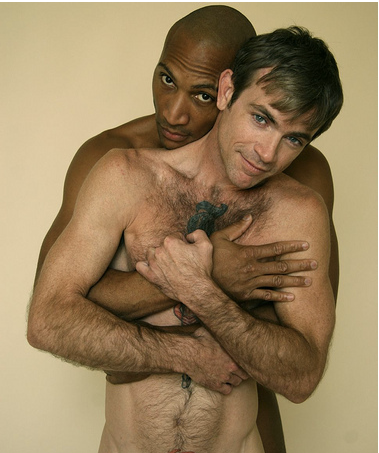
Rufus Wainwright
Gay people are creative
Okay this one might seem like a stereotype, but it is not coincidence that we see so many gay people represented significantly in the arts and humanities. Gay people are generally very attuned to music and rhythm, image and colour. We are laughed at sometimes, these days good-naturedly, by those who need some clothing advice, colour advice, music or movement advice. In the churches, we are generally involved with music and the liturgy because we are so good at it. We have seen gay people thrive in the film and theatre industry, the music industry, the dance industry, in photography, in design, in fashion, in hair, in tourism, in hospitality. But the delightful thing is that although we obviously do do well in those arenas, we also bring the same creativity to the world of education, to medicine, to my own profession of psychology, to commerce and banking, to management and business, to building and architecture and engineering. Gay people tend to be creative people - there is no getting away from it. We can think outside the square and come up with alternatives that can be positive, workable and affirming.

Gay people are often in tune with the great questions
Because gay people by our very nature have to go through a gay sexual identity formation (you can read about it on pp86-90 in BGBC), we have been introduced at a young age to the great questions of life, the ultimate concerns. Now some think these questions are a waste of time. I don't. I think they are the most important questions of all and gay people are faced with struggling with their resolutions from the onset of puberty. Who am I? Where do I fit? What does it all mean? Is this all there is? What will life be like for me? How will I navigate my sexuality in a predominantly straight world? Is there a God? Des my sexuality matter to God? And all the others. There is a certain wisdom that comes from struggling with these great questions. An openness too. An ackowledgment that we don't have all the answers. A humility in life about the human condition. Do gay people have this more than straight people? Perhaps not, but because of our early identity formation, a psychological and behavioural process that takes years, we may in fact be more open to the great questions perhaps because we may in fact be more exposed to them. Many a straight person values the ideas and input of their gay friend. There's just something about what they're saying that rings true.

Gay people are generally people of peace
You won't find many gay people who are into violence or aggression. In fact, some of us in times past, and even occasionally in today's society unfortunately, have been victims of aggression. But gay people more often than not are peace-makers. We abhor violence. We avoid it naturally. It is part of our make-up to solve difficulties without violence and aggression. We avoid hostlity and try to soothe it where we are able. Blessed are the peace makers. They are a delight.


Gay people are in tune with sexuality
Gay people talk about sex. We think about sex and we have sex. After survival, sex is just about the strongest drive in the human make-up and gay people understand this well. Why? Because our lives, on one level, are focused through a prism that holds sexuality as being normal, healthy, satisfying and positive. We tend to have done away with the whole 'sex is dirty, sex is unclean, sex is filthy, sex is not to be talked about, sex is sinful, desire and the body are to be denied' stuff that the church has spat out for two thousand years. These are the messages of the Christian church down through the ages, stemming right from St Paul himself in the 1st century and onwards through other early church fathers like Augustine and Jerome. As these views have filtered into society, they have contaminated even our modern world and have caused untold damage to millions of people. Not all Christian teaching around sexuality is in this category I hasten to mention, but the 'sex is filthy and desire is sinful brigade' are wrong and harmful and need to be challenged. And the lives of we gay people do challenge them. Through the formation of gay sexual identity, from puberty through adolescence and youth, gay people have wrestled with these toxins and won through so that we have a healthier, more postive, more life affirming view of the place of sex, the body and desire in the human life.

What can I say - being gay is a delight. I want to tell our society, its parents and teachers and priests and pastors, its doctors and lawyers and professinals and workers, that being gay is not a disappointment. It is a wonderful way to experience life. I would be happy if any of my own nephews or nieces or their children turned out to be gay. Why? Because it's not a disappointment. I want society to understand this, to change the rhetoric, to undertake the mental shift from disappointment to delight. Every kid, every person has an absolute dignity from just being human. Can we not equally value being gay with being straight? And not place the pall of disappointment on the shoulders of our wonderful gay and lesbian brothers and sisters.

Being gay is a delight. It is an attractive, alluring, pleasurable, pleasing, delectable, wonderul, postive way of experiencing life. There is nothing here not to like. Of course I am not saying the absurd, that gay people live only positive pleasing lives. Not at all. But by virtue of their sexuality, they should not be handicapped by a society that looks at their prospects with the heavy burnden of disappointment before they even get started. Gay people can make of their lives what they will, just like straight people can. On pp226-229 of BGBC, I talk about some of the great gifts that gay people can also bring to the church - another reason for delight.

I also stated above that delight embeds the word light. Gay people can bring a light to the world, and yes I am very aware of the Gospel allusion. We can be a force for good in the world and a force for change. I think we do this well. And we can bring a lightness and sense of fun, a light-heartedness too. Time for society to grow up. Time for a better world. Time for all of us to start celebrating the idea that a young person might be gay. Give them the best start in life we can. Accept them. Love them unconditionally. Guide them of course. But let's also celebrate the delight of their lives as being the delight of our lives.


Pax et Amor - Stuart

Sunday, 18 March 2012

A Queer Reading of The Pearl of Great Price

On pp106-7 of BGBC, I state the following about my theological position these days. "However, one of the greatest reform movements to sweep the world church is the Progressive Christianity or Emergent Church movement, which is not fearful of human intellect or the spirit of inquiry and seeks to have modern scholarship elucidate faith in the context of a modern world." I am comfortable in aligning myself with such a Christianity. One of the principal areas that the Emergent Church is looking at in its new ways of thinking about faith is the nature of salvation.

For a very long time now, the nature of salvation has been discussed in terms of an innocent man being required to die to pay a price to an angry and remote God for the sins of humanity, thus saving them from His wrath and judgement, and bringing them salvation. In theological circles, this is known as the Penal Substitutionary Model (PSM) of salvation. You know it well. It has been taught to us all from the cradle and it is the major discourse on the topic of what salvation means in Christian thinking. Jesus had to die for yours and my sins, thus paying the price, a blood sacrifice, for us all and in our stead, thus allowing God to put aside His righteous judgment and wrath and accept us as His children. It’s pretty powerful stuff, and not a little unsettling, I am sure you will agree.

However, not everyone in Christian scholarship is entirely comfortable with the PSM holding the principal and only way of talking about salvation. Many scholars are uncomfortable with the picture of God that the PSM presents and they feel that by focusing on the ‘payment for sin’ concept, the model leaves out the positive message of salvation and the indescribable love of God. So in this blog let me refocus on another aspect of what salvation might mean.

One of the characterisations of salvation that the Progressive Christianity movement is trying to reinvigorate is the idea that salvation can mean healing, wholeness, unity and connection – with the Divine, with oneself and with one’s neighbours and the world. Such healing and wholeness comes directly from the life, the teaching, the example and the death of Jesus of Nazareth. Some of those aspects reach up to the transcendent, some out to our fellow humans and some within my own interior world. It is this last that I would like to emphasise here as we take a fresh, and this time, queer look at one of Jesus’ stories – the pearl of great price.

I always used to puzzle over this shortest of parables. It is so tiny. When they finally added the punctuation and verse numbers to the Bible, which it didn’t have originally, this little story turned out to have just two verses or two little short sentences. Yet it is a powerful little story and really packs a punch, as so many of Jesus’ stories did.

It is found in the Gospel of Matthew, chapter 13 verses 45-46.
Here it is in two different translations.


"Again, the kingdom of heaven is like a merchant looking for fine pearls. When he found one of great value, he went away and sold everything he had and bought it" – NIV.

"Again the Kingdom of the Heavens is like a jewel merchant who is in quest of choice pearls. He finds one most costly pearl; he goes away; and though it costs all he has, he buys it" - Weymouth New Testament.

So with our notion of salvation meaning healing and wholeness, unity and connection, let’s take a fresh look at this parable especially in the way it may relate to LGBT people.

First up, notice how Jesus frames the whole thing in the terms, "the kingdom of heaven is like." This is not the first time Jesus uses this expression and it is not the last. In modern Biblical Studies today, we would say that this theme of the Kingdom of Heaven is one of the major substantive themes in all of Jesus’ teaching ministry. He was always on about it. These days with better understanding of ancient languages through linguistic analysis, a better translation would be ‘the realm of God’ or even the ‘government of God,’ or to use the everyday, ‘God’s way of doing things.’ In other passages in the New Testament, Jesus went on to talk about the realm of God in proximity terms – it is described as being: at hand, close by, around you, here, within you. You can’t get much closer than that last one, can you – within you.

Secondly, Jesus offers a simile to explain what this interior realm of God is like. It is only one simile he uses out of a number so even from this we can take reassurance that there is not just one way to characterise salvation, for surely that is the realm of God within us - no, Jesus himself uses many ways to describe it. And what does he say? He says that it’s like this particular merchant who is on the lookout for fine pearls and then when he finds one of extraordinary value, he goes away and sells everything he has in order to purchase it. When I read something like that, I always want to know the ins and outs of it. For example, I want to know why this is a good picture of the realm of God as opposed to some other picture? How does it work to give us an example of how the realm of God operates? What are the metaphors for life here?

Let’s look. The merchant is looking for something special we are told. He’s on the lookout. He is on a mission to find something of great value. That’s exactly the kind of mission I was on when I was trying to come to terms with my gay sexuality. I desperately wanted some happiness in my life. I certainly did not experience healing or wholeness, unity or connection, either with God or within myself, even though I followed after the Lord with all my heart and strength, and despite my church life with all its praise and worship and fellowship, I always felt inwardly in despair that I held this great and dark secret that kept separating me from God. Or so I thought at the time. Healing and wholeness eluded me.

And when I finally got honest with myself and started looking for some real life answers, it was only then that I experienced the realm of God, the breakthrough that brought me to the light where I could see my life clearly. I could stay closeted, in denial of my sexuality and attempt to suppress my human desire for the rest of my life in the erroneous belief that I was doing it because God wanted me to. Or, I could accept the very obvious and clear fact that I was a naturally gay man and was attracted to my own gender physically and emotionally. I could remain in self-disgust or I could come out into the light and accept myself and like myself and even love myself for the man that God had made me. It was a stark choice; one or the other - despair or hope, lies or freedom.

Then in our text, notice too that the merchant actually did find what he had been looking for. With all that resolve and all that effort, he finally found his treasure, his valuable pearl, or as the old King James Bible puts it so beautifully, his "pearl of great price." I think as gay people we too find our pearl of great price. It is of such inestimable value for two reasons. The first is because it represents something that we have longed for for so long, something we have searched for for so long – no less than a new way of living, a new way of being. All the early years of wondering, running, hiding, suppressing, fearing, but always knowing deep down. And then we reach it, we find it – wow, what freedom!


But secondly, it is of such inestimable value because our pearl, just like the merchant’s, costs us everything, our old life. Privately coming to terms with our sexuality and then subsequently coming out has resonance with Christian baptism doesn’t it? The old is gone, behold the new has come. Our merchant on a mission after finding his pearl then goes away and determines to have this new thing. He is so focused. He sells everything. The Weymouth puts it beautifully doesn’t it? "He finds one most costly pearl; he goes away; and though it costs all he has, he buys it." It cost him everything. He really must think it's worth it.

Accepting our sexuality and living life as an out gay person costs us our old way of living, our old way of experiencing human life. For some, like me, it costs us some friends. It cost me my job, my salary, my security, my social life and my church life. That was twenty years ago and times have changed. But some might still ask, "was it worth it?" And the answer – Absolutely YES! When you find the pearl of great price as a gay person who has been struggling with sexuality, nothing compares. Living in freedom. Liking yourself. Loving yourself. Meeting others just like you. Having love in your life. Having touch in your life. Living authentically. Not having to hide. Not having to pretend. Not having to live the life-lie, as I put it in BGBC. All of that drops away. It is worth ALL of the cost.

So the realm of God is just like this merchant, so Jesus says. This is our salvation. It is an interior change - a setting free emotionally, psychologically. The Spirit of God leading me, inviting me to intimacy and relationship with Himself and others asa gay person. My salvation brings me healing and wholeness, unity and connection. At one with myself finally. Feeling the gentle guidance and undergirding of our loving God in my life as a gay person. God’s salvation within.


So if you find yourself a gay person in a church or family who is longing for salvation - longing for healing and wholeness, longing for unity and connection, then let the light of God’s love and gentle guidance guide you into being set free too. Don't live the life-lie. Talk to someone you can trust. If you don't know anybody, find someone. be like the merchant on a mission. Don’t put it off. You’ve been searching for this life of value, this life of happiness for such a long time. Let the Spirit of God allow you to find your own pearl of great price. And you’ll be able to follow the Way of Jesus in your life as a valued and loved gay person. Your pearl will be of inestimable value.

Love to hear your thoughts.

Pax et Amor - Stuart


Wednesday, 22 February 2012

Hello and Welcome

 Hi everyone and welcome to the BGBC Blog – great to have you here.

I thought I might start off by talking about how much interest Being Gay Being Christian has been generating. It has fascinated me that so many people are finding this topic interesting and want to know what it's all about. Over the last few weeks, I have done several interviews with mainstream radio and the press. You can see a selection of these on the Contacts page on the main website. It's really interesting to see how non-churchy or straight people view these issues.


With some of them, there has been a sense of incredulity, as in, "well why wouldn't you be able to have a faith just because you're gay - that doesn't make sense!" On the outside of the church looking in, the values espoused in the traditional sexuality teachings don't seem to make a whole lot of sense to them. I suggest this is because most people have moved on. It is now common-place for pre-marital sex to occur and no-body much bats an eyelid let alone gets all upset about it. This has changed within my own lifetime. When I was a child, the sixties sexual revolution was sweeping the world and free love was all the rage. However, we learned there was a down-side to free love, as people had to learn the hard way that sex is not just sex and people can get hurt. Yet, this was the period where the youth of the time threw off the imposed sexual values of a by-gone era and tried something new. Most people had girlfriends or boyfriends before they married, and were sexually active in those relationships. This was the natural course of events when one went through adolescence. There was no sense of shame or guilt; none of them felt that what they were doing was evil or malignant or against God. This generation eventually met their spouses and married and the age of marrying a virgin as the only acceptable pathway into marriage was gone. And so it has remained in generations to follow. It is this normalisation process that happens across time I would suggest that is the key to understanding why incredulity is one of the main responses to gay sexuality and faith in the wider community. There is the sense that "hey, we've moved on from all that - if you're gay and you want to be a Christian, then be one. What’s stoping you?"


The other main response is one of quietly going out and buying the book. It is fascinating to see that people whom one might not suspect, actually do have an interest in the topic. Why? I think there are probably lots of reasons. A couple of people I have met have bought the book because they have a gay son or daughter or they know someone who is gay. They want something to read that can give them some answers. Hopefully, BGBC has played a role there. And obviously too, there are some out there who are struggling with these issues themselves. Really, I wrote the book for both such groups. Then there are those who, either gay or straight, have an interest in spirituality or theology in all its forms. I think the straight ones of this group are awesome for being so open to the things the Spirit is doing among us all in His continuing creative act. And I also know that a few people or two have bought the book as a helpful reference guide for times when they are talking to people who might benefit from its pages. Already, I have heard a lovely story of one guy who used the book in this way with a friend and recommended to his acquaintances that they do the same.


So lots of interest. And I hope it continues to grow as the word is spread that BGBC is available. I have more media lined up over the next few months which is great so to use the words of Michael Kirby at the end of his wonderful Foreword, “Another pebble is thrown into the waters of life. The ripples are growing in strength. Their message is reaching the four corners of the earth.”


If you’ve bought a copy Being Gay Being Christian or you intend to, feel free to post a comment as to what prompted you to obtain it. I’d love to know.


Pax et Amor - Stuart