
"Congressman Paul Broun (R-Ga.) said last week that evolution and the big bang theory are "lies straight from the pit of Hell." 'God's word is true. I've come to understand that. All that stuff I was taught about evolution and embryology and the big bang theory, all that is lies straight from the pit of Hell,' said Broun, who is an MD. 'It's lies to try to keep me and all the folks who were taught that from understanding that they need a savior' (1)
Southern Baptist leader Richard Land said that "the LGBT community was 'recruiting down in the grade school levels' for 'homosexual clubs,' which was tantamount to 'child abuse' " (2)
"In another provocative comment aimed at Barack Obama, evangelist Franklin Graham on Thursday accused the president of having 'shaken his fist' at God by changing his position on same-sex marriage. 'It grieves me that our president would now affirm same-sex marriage, though I believe it grieves God even more. This is a sad day for America. May God help us.' " (3)
Introduction
This post is one I feel constrained to write aftera week's 'discussion' with a
 fundamentalist, a pentecostal pastor, over the nature of LGBT people and our lives. With 'love' and 'care for the truth' and in unambiguous
 terms, I (and a few friends) have been told in discussing the issues, the evidence, the Bible, the theology, the church history and even our personal lives that my sexuality is a choice, that I am not living according to God's plan for humanity, that my sexual orientation is not according to God's design, that I am essentially belligerent for disagreeing with this position, and that I should repent, change my life and remain celibate for the rest of my days.
Thus, I am feeling exactly what most gay people have felt from the Christian Church for over a century. I am left feeling rejected, judged and deemed inadequate. As I said in BGBC, it is no wonder that gay people head for the hills at the first sound of a Christian approaching. So much for the Good News.
During the course of our discussions, my fundamentalist pastor friend ignored every word I said. She ignored every bit of science I wrote about. She ignored the Biblical scholarship showing an alternate exegesis for the sledge-hammer verses used against gays. She ignored the personal testimonies of myself and several other gay people of faith. She quoted Scripture. She refused to answer some questions that she obviously found too challenging. In places, she went on the offensive. She accused us of making assumptions about her despite the clear references to her writing we made. She deleted our posts. She came back later and said that she was trying to send a message - ????. She stuck mercilessly to her script and she would
Bishop Gene Robinson states that 95% of the hurt. the damage and the harm done to gay people has been done by the church. And he goes on to say that it is the church which will have to do something about it.
In this post, I want to take a look at the nature of fundamentalism. I want to get inside the fundamentalist's head to see what makes it tick. I want to explore with you what it is that fundamentalists believe, how they believe, what is at stake for them, the cognitive and emotional landscape of their worldview and the psychology of such a context. How do I know about this stuff? Because I used to be one.
Is it easy to recognise fundamentalism? Yes absolutely. Its adherents will compare closely to varying degrees to the descriptions I write below. I am supremely aware of the irony of talking this group as 'them.' However, given that they have already 'othered' or distinguished themselves from the rest of us, I feel a little more at ease with doing so, and really see no way to write about this topic without doing so to some extent.
First Principles
So, as we launch into this, let's justtake a moment to summarise
disagreement itself that undermines the very notion of fundamentalism - but we'll leave that for now, but this is basically what they believe. It is a précis of not all fundamentalist thinking but the three principal areas of theology that Christians deem important. And it's is pretty much what I used to believe also for a very long time.
The Bible
The Bible is the Word of God. It is divinely inspired and cannot ever be ignored in its precepts and teachings. God is its author. That is why it is referred to as God's Word. Like God, it stands forever. It should be taken literally and at face-value unless the text is obviously metaphorical. It relates events as they historically happened and sees these events as factual and true. There is no real room for interpretation here. It is completely consistent with itself internally. The attitude of the believer is to accept the writings of the Bible in this manner and in no other, regardless of challenging information or counter observations. There is no other source of authority in the believer's life. While the Tradition of the Church is interesting and helpful, it is Scripture that has the final say on all things. It is sola scriptura all the way. A common saying that summarises the fundamentalist attitude to the Bible is "God said it, I believe it, and that settles it."Soteriology - The Theology of Salvation
Fundamentalist soteriology sees a lost humanity under judgment of God, which must, in order to be set free from that judgment, accept a strict set of salvation principles that include (a) believing certain precepts and (b) making a personal appropriation of the work of Jesus on the cross - often called 'praying the sinner's prayer.' God is seen essentially as a judicial figure, a judge, despite their rhetoric of 'God is love,' who demands a blood sacrifice in order for divine justice to be fulfilled and who sends Jesus into the world to fulfil the role of blood sacrificee. Jesus is seen as the Son of God, who is obedient to God the Father, and who pays this blood sacrifice as a penalty for sin in the world on behalf of every human being, past, present and future. His cruel and murderous death is seen as placating God's eternal wrath. God's divine justice demands a penalty and Jesus pays this penalty for us all vicariously. Humankind is thus set free from the judgement of God. However, most fundamentalists will not be satisfied with this arrangement unless the individual makes a personal appropriation of this gory work on the cross and will not admit salvation until such personal appropriation is made. Without this salvation, all individuals will be judged and found wanting by God's divine justice and will be cast into hell for eternity. Hell awaits 'unsaved' humanity. After three days in the tomb, Jesus is physically resuscitated in an other-worldly body and soon after returns to heaven.Eschatology - The Last Days or End Times
Fundamentalists from the beginning have always believed that we are in the last days, meaning that the world will plunge into darkness or wickedness, reject God and then Jesus himself will return to the earth physically to set up the reign of God here. Wars and natural disasters are interpreted as signs of the impending doom and 'second coming' of Jesus, so are overt signs of immorality - cue the gays. Many fundamentalists believe they will be 'raptured' away, ie., snatched away by God into the air, before this doom happens. There have been last days advocates at the turn of every century and the turn of both millennia, through all wars and after every natural disaster and visitation of a passing comet. St Paul himself was one. The earliest book of the New Testament 1 Thessalonians, written about 18-20 years after Jesus, has Paul talking about Jesus returning in his lifetime. Thirty years ago, I used to believe we were in the end times too and believed that I would see the return of Christ in my lifetime. In the evangelical/pentecostal circles in which I travelled in those days, my belief was unremarkable.
The Ghetto
Now that we know basically what fundamentalists believe and what they think of those who do not believe as they do, let's start this exploration of the psychological context in which they think. And to do this, I want to use the metaphor of a ghetto to assist us.A ghetto has been many things over the centuries but some commonalities to almost all ghettos are the following factors:
- ghettos are segregated communities
- ghettos are under strict regulation
- ghettos are typically in extreme poverty
impoverished lives
- ghettos have a sense of being confined
- ghettos are typically populated by a homogeneous race or ethnicity
- ghettos often have a self-sustaining ethos that allows no-one from the outside to corrupt or contaminate their ways in order to maintain and protect the life of the ghetto, its sub-culture, its language, its customs, its behaviour, its treatment of others, its beliefs and worldview.
First, fundamentalists are segregated. They have an us and them mentality that is impossible to miss. They speak of the vast bulk of humanity as 'the

Secondly, fundamentalists have their own system of governance. In effect, fundamentalists police each other rigorously. If you stray, the elders of the church are called. Meetings will be had. You might be asked to reaffirm the faith in the traditional way. There are huge disincentives not to stray, not to ask questions. The grapevine can be a very powerful tool used in their hands. People can be maligned behind their backs and not even know it until eventually somebody comes forward to inform. 'Anyway, if you're one of us, you need to think like us. You need to agree with our tenets, the way we teach them. You need to agree with the way we do things. You need to have our attitude to the Bible and its interpretation if you want to be thought of as an orthodox Christian'.
Thirdly, because of this attitude to knowledge, fundamentalists are impoverished in their thought. You don't need to read Aquinas, you've got the Bible. You don't need to read philosophy, you've got the Bible. You don't need sociology or psychology, you've got the Bible. It doesn't matter what historians of Jesus' time say, the Bible says ----. Those findings of archaeology that don't match up to the narrative of the Bible are wrong. They must be because the Bible says -----. That scientific paper about the human migration out of Africa is biased and cannot be trusted. Our own scientists at The Word of God University have published a rejoinder and totally discredited it; after all, most Nobel prize winning scientists are Bible-believers don't you know. I remember watching Jimmy Swaggart many years ago on television walking up and down his vast and opulent stage mocking psychology and spitting out the word with venom emphasising each of its four syllables and contorting his face into the look of revulsion, all while juxtaposing the science to the Bible. I view any group which disallows or discourages the asking of questions, the spirit of enquiry, the study of science, history and the humanities, as being impoverished. I view any group which focuses it sole allegiance to one text or one authority, no matter what it is, and no other, as being intellectually impoverished.
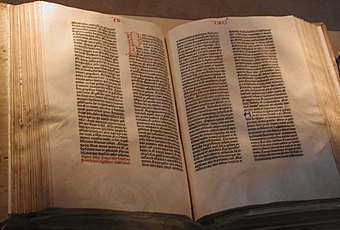
individuals and it has profound passages about how these two faith communities saw and experienced God and the numinous, it also has some terrifying passages that are completely counter to the values of the West in the modern world. There is both generosity and genocide, love and lawlessness, hagiography and hatred, justice and judgmentalism, prophecy and prejudice, sensuality and sexism, hope and homophobia. There is more than just one voice in the Bible. There are many voices and they are not all consistent with one another. There is the voice of Jesus and the prophets with their amazing message to the world and there is the voice of domination, revenge and destruction. The Bible is not a clean-skin wine or a hermetically sealed, germ-free, pristine white as snow text, but a mix of wonder and terror. More like a marble than an alabaster. And when reading it, it doesn't take long to find both. And it becomes this admixture because of the time in which it was birthed; the world of antiquity where starvation, death or slavery were just around the corner at every turn for the average person. Today, I read my Bible in a very different way.
To cling to this text as though it alone is the one shining golden book to the world is myopic and ignorant. To suggest that its interpretation can only be acceptable in the fundamentalist worldview is dangerous, shallow, limiting and ultimately life-negating. In truth, such a view turns more people off the message of the Gospel than any ancient Roman persecution ever did. This model of knowledge has done more harm to the Christian faith in the last century than almost anything else in the modern Church (with maybe the clerical sexual abuse scandal and its cover-up in the Catholic Church and others being the exception). It has impoverished the Church around the world and kept many uneducated people blinded to the idea that there might just be something more, something different to this view of God and our lives.
Fourthly, fundamentalists are not free. Their freedom to enquire and to ask questions and to give doubt its proper place in human spirituality is curtailed by the system of orthodoxy that it so relentlessly pursues. I recall my own university days in the Humanities when I took a year of Religious Studies. Wow, what a kerfuffle I caused. When I told my fundamentalist friends, they were absolutely aghast and actually did their best to dissuade me, so confronting did they find my studying other material about religion. "You know Stuart, you really shouldn't be looking at that stuff you know. You could get confused about the truth. You could be opening yourself up to the evil one because you'll be looking at other religions too. It's really dangerous you know. I certainly wouldn't do it". When I insisted that my enrollment was in place already, one person came to me and said, "well at least you should cover yourself in the blood before you go to each class." And guess what? I did.
The sanctions against thinking, against
questioning, against standing up for
 something you thought was right, even though it might challenge an orthodox view are palpable. In one of the churches that I formerly attended, a new pastor came in and sacked every woman elder in the church and stated that women would no longer be eligible for eldership [read: leadership] because of his view of the Scripture. And with that, four or five wonderful women were summarily dismissed and no-one could say anything because he was a new pastor and he was quoting scripture. A clear injustice. No freedom to challenge, no freedom to ask or speculate. No, just conform to our view of orthodoxy. It always felt to me at the time and still does after all these years that something unjust, nasty and coercive was perpetrated. But welcome to the world of fundamentalist church governance.
Fifthly, when you all conform to the one view, the one interpretation of the Bible, the one epistemology of life and the cosmos, the one ethic, the one set of expectations, the one view of humanity, you have pretty much given up any sense of individuality at all. Fundamentalists lose individuality. You join the group. You're in. 'You're one of us.' You're not like one of those on the outside, whether they be liberal Christians or people in the world. Fundamentalists of a certain persuasion are to be found in every Western country. When they go to a world convention, there is a confluence of belief and action that is powerful and even majestic in its own way. People really do feel empowered. They really do feel like their sins are forgiven and that now God is pleased with them. They really do feel like they are blessed of God because they walk in His paths and abide by His ways, that they will be prosperous on earth, that they will be healed of sickness, their sins forgiven, will have joy in their hearts and their ticket to paradise in the after-life
Finally, fundamentalists live in an ethos that is shared, nurtured, protected and proselytised. They are homogenised. It is a walled city, much like those in the ancient world whence they derive their meaning. Nothing can get in. Nothing can get out. Why so strong? Because they feel they have to. Fundamentalists talk of 'the spirit of the age' as being antithetical to the things of God. I would suggest otherwise. The growth of egalitarianism, the rejection of slavery, the development of pluralist democracies, the acceptance of anti-discrimination jurisprudence, the rejection of sexism, racism and homophobia along with the concomitant rise of the feminist movement and the change of attitude to sexual and reproductive values have coincided with a massive swing away from institutionalised religion and a burgeoning growth in the interest of a more reasonable spirituality. Such a change in the attitude to the things with which religion concerns itself is anathema in the eyes of fundamentalism. It cannot cope with these value changes and has historically opposed them all the way. Fundamentalist Christians have used the Bible to endorse slavery, apartheid, the subjugation of women, the subjugation of non-whites and the rejection of gay people and our sexual orientation both historically and in the present day. Fundamentalists feel they are being hemmed in by the world which is becoming more increasingly wicked in their view and so they concern themselves with issues they feel represent a falling away from God, but in so doing, often abandon or neglect the crux of the Jesus message given us by his life and teaching. "Blind guides! You strain your water so you won't accidentally swallow a gnat, but you swallow a camel!" (Jesus to the Pharisees, Matthew 23: 24). Take a look at the American church.
 Phil Zuckerman, Professor of Sociology, Pitzer College in Claremont, CA. and Dan Cady, Assistant Professor of History at California State University, Fresno, make the following point about fundamentalists socially and theologically. "The results from a recent poll published by the Pew Forum on Religion and Public Life (http://www.pewforum.org/Politics-and-Elections/Tea-Party-and-Religion.aspx) reveal what social scientists have known for a long time: White Evangelical Christians are the group least likely to support politicians or policies that reflect the actual teachings of Jesus. It is perhaps one of the strangest, most dumb-founding ironies in contemporary American culture. - - - - - - Jesus unambiguously preached mercy and forgiveness. These are supposed to be cardinal virtues of the Christian faith. And yet Evangelicals are the most supportive of the death penalty, draconian sentencing, punitive punishment over rehabilitation, and the governmental use of torture. Jesus exhorted humans to be loving, peaceful, and non-violent. And yet Evangelicals are the group of Americans most supportive of easy-access weaponry, little-to-no regulation of handgun and semi-automatic gun ownership, not to mention the violent military invasion of various countries around the world. Jesus was very clear that the pursuit of wealth was inimical to the Kingdom of God, that the rich are to be condemned, and that to be a follower of Him means to give one's money to the poor. And yet Evangelicals are the most supportive of corporate greed and capitalistic excess, and they are the most opposed to institutional help for the nation's poor -- especially poor children. They hate anything that smacks of "socialism," even though that is essentially what their Savior preached. They despise food stamp programs, subsidies for schools, hospitals, job training -- anything that might dare to help out those in need. Even though helping out those in need was exactly what Jesus urged humans to do. In short, Evangelicals are that segment of America which is the most pro-militaristic, pro-gun, and pro-corporate, while simultaneously claiming to be most ardent lovers of the Prince of Peace" (4).
Dichotomous Reasoning
There are orthodox beliefs and there are unorthodox beliefs requiring correction. Most fundamentalists would go into bat assertively for the above tenets and hold you accountable if you disagree. Fundamentalists tend not, by nature of their worldview, to be merely nominal in their faith. They are straight up and down the line, raring to go, Bible-believers who see any other form of Christian thought as being wishy-washy and an abandonment of the truth of Scripture. So there is an intensity with fundamentalists in their approach. It pours out of them. They believe way up the right hand end of the Likert scale and let others know that that is the only way to believe. They must stand up for what is right. They must stand up for what is good. They must protect the reputation of God, as if God needs protecting. They must protect the reputation of the Bible, instead of adopting a more nuanced and intelligent approach to it. They must stay true. It's "faith of our fathers, holy faith, we will be true to thee till death." If they should falter, God's voice in the world will disappear. God's work in the world will evaporate. This is the psychology that lies behind fundamentalist stridency. It's an all or nothing model of the world and their place in it, a cognitive distortion that psychologists call 'dichotomous reasoning.' It's one end or the other, black or white, left or right, up or down. There is nothing in between. "You may never have the opportunity to hear the Gospel again, so I'm going to tell it to you whether you want to hear it or not, besides the fact that we're in a public place and you just want to get your shopping done and your baby is crying. Your shopping can wait. Eternity can't."Orthodox Alexithymia
This insensitivity to people's feelings and lives is quite apparent and is one of things that 'God-botherers', as they are often derisively called, are best known for; they bother people and get in their faces and tell them how much better their lives would be if only they would accept the fundamentalist worldview. It is not difficult to witness. I watched the same pentecostal pastor I spoke of earlier describe a father who was defending his gay Christian son as 'well you would say that, you have an agenda'. The man loved and accepted his son and was defending his life to this person, but so confronted was she that she went on the offensive. Her worldview was being challenged. Retreat to orthodoxy. Name call. Adopt an arrogant 'you are wrong and you couldn't possibly be right because I have the Bible and God on my side' posture. Sensitivity, empathy for your fellow interlocutor? You won't find it here. A real human emotional response to the challenges of life. Not here. In the world of abnormal psychology, alexithymia is a phenomenon that describes people who are disengaged from their own emotions, such that they cannot articulate how they feel nor do they understand what caused their emotional state.Ghetto-Think
I am coining the word 'ghetto-think' to describe the fundamentalist's cognitive and emotional landscape. Let's take a brief look at each.The Cognitive Landscape
Anti-Modernity
Fundamentalism is essentially a rejection of modernity. It does not ascribe to a modern attitude to knowledge or the gaining of knowledge. Here's our old friend epistemology again. Fundamentalists reject questioning, reasoning, searching, enquiry, investigation, nuance, blurred distinctions; all of which a modern attitude to knowledge accepts as being everyday and unremarkable. It is best friends with doctrine, received wisdom, dogma, ancient world contributions to age-old questions. They have their prepared answers off pat.Other-Centred
 It is focused on others not self. When you hear a fundamentalist speaking, you will almost always hear them speak about your life, your problems, your sins, your walk with God, your faith, your eternal destiny, your salvation. You rarely hear fundamentalists talk about self or their sins, their short-comings, their faith (beyond the script), their doubt, their fear. It's always about changing your life. I listened to Fred Nile, an Australian conservative Christian politician speak to out gay bishop Gene Robinson and atheist Laurence Krauss on a television program called Q&A. Almost every communication uttered by the Rev Nile was to tell Gene and Laurence something about themselves that Fred didn't agree with; their life, their beliefs, their behaviour, their worldview. Fred didn't hold back. He implied to Gene Robinson that God would reject him ultimately, by quoting some of Matthew 7: 22-23 at him, "Many will say to me on that day, ‘Lord, Lord, did we not prophesy in your name and in your name drive out demons and in your name perform many miracles?’ Then I will tell them plainly, ‘I never knew you. Away from me, you evildoers!’ " Never mind the insensitivity, never mind the location - national television, never mind the arrogance of judging another, the orthodox view is that homosexuality is a sin and God will reject you, even if you are a bishop who claims a wonderful and living relationship with God. Fundamentalists tend on the whole to be much more interested in the foibles, weaknesses and stuff-ups of our lives, but rarely their own.
Certainty of Rightness
They have an 'I'm right, you're wrong' attitude to every conversation about matters of faith and ethics. There is an insurmountable belief in the rightness of their position; a position from which they will not budge. Yes, they will talk to you about your position, let's say gay sexuality, but ultimately you're wrong and you need to change. They will ask you to be flexible in your thinking but if you ask them the same thing, they will fudge it. A young girl asked a question of Fred Nile on Q&A. She said, "when did you choose to be heterosexual?" Fred replied in the way any fundamentalist would. "I did not choose to be heterosexual, I was born heterosexual." When the program host then asked, "then why can you not admit that gay people are also born that way since science is indicating just that?" Fred replied, " they are not born that way, they choose to be that way." In responding in this manner and to the groans of the studio audience, he was either unaware of the immense bias and disparity in his attitudes to gay and straight people or just would not admit it publicly. There is a rigidity of thinking that any psychologist would deem unhelpful or unhealthy in any other area of human experience. Evidence contrary to their position will not persuade them. If the evidence shows something other than their Biblical view, the evidence must be wrong. I have heard fundamentalists in arguing for a six day creation and a young earth cosmology - the earth is only about 6000 years old according to calculations based on the Biblical account - turn the most cart-wheeled conceptual gymnastics that you could ever listen to in order to make the Biblical account of creation stack up (never mind that the Australian aborigines have been living on this continent for over 40,000 years). They do exactly the same with the kinds of evidence I have shown in my book about gay sexuality. There, they will trot out NARTH studies, a discredited biased anti-gay group of mostly psychiatrists who publish their own journals because they cannot get their papers into peer-reviewed science journals of merit.Limited Intellectual Context
Discredited Methodology
Following from this, fundamentalists use the Bible as their proof of or evidence for their position. They therefore resort to proof texts, a form of exegesis that is discredited by the best schools of theology because such a method removes context. I loved an old Methodist pastor who once said in a service that I was attending, "a text out of context is a pretext." In other words, you start using proof-texts to uphold your position, then you've got an agenda, a pretext for what you are saying. Taking text out of context is not the way modern scholars treat the Bible today. Every verse in the New Testament without exception must be explored in the context of first century Judaism and more wholly in the context of the Roman Empire and even more wholly again, in the violence and domination of the ancient world.Drive to Persuade
There is an imperative to speak, to be vocal among fundamentalists. So many other traditions, both Christian and non-Christian, have a listening element or a meditation element in them. Not fundamentalism. You have to speak. You have to protect God's reputation and the Bible's as you see it. You have to spread the Gospel, you have to evangelise by presenting the fundamentalist first principles (as above) no matter.The Emotional Landscape
Desperation
 The first emotional cab off the rank is that of desperation I think. When fundamentalists participate in a dinner party where all manner of issues are openly discussed, they will be desperate to get their view across and seen as the truth. There will often be a palpable observational change come over their demeanour where they will just about blow a valve to ensure that 'God's view' is put forward in the conversation. There is a desperation to protect God and the Bible.
Fear
There is an avoidance of certain issues. This is fear. Fundamentalists do not like the greys and hues of human life. They prefer the black and white, so are supremely uncomfortable talking about the fuzzy areas, which is precisely where most human beings live. Life is rarely black and white. From cradle to grave, we have to face so much challenge in our lives. This brings tension and uncertainty. Glib phrases like 'God will look after you' or 'God will take care of your needs' just don't cut it even if we have a faith in a loving God whom we believe does look out for us. Fear of the real messiness of human life with its challenge, its uncertainty and its sorrow seem far away from the average fundamentalist who just wants to quote to you 'the joy of the Lord is your strength.' Tell that to the person whose child has just died in a hospital room or to the widow whose husband of 50 years has just passed away or to the kid whose teenage friends mock him because he is gay, or to the lonely depressed person sitting at home alone.Self-Doubt - Guilt - Shame
I think that fundamentalists are also prey to their own theology. So often, their view of themselves is bound by falling short or by self-doubt, by wondering whether they have prayed enough, or fasted enough, or read their Bibles enough for them to be considered sanctified. Lots of room for doubt here, but rarely confessed openly. And of course, when they are alone with their own thoughts and their own lives, away from the church leadership, what do they do with their doubts then? Feel guilty for having them? Feel ashamed for experiencing them? I think so. You can't really hold to an all or nothing theology, come up short of it yourself (like any mere mortal would), and not feel guilty or ashamed. You are supposed to be the one carrying the torch, not failing like those in the world.Anxiety - Sadness
Infantilisation
The dynamic of the relationship between a fundamentalist church and its individual members is one of authoritarian parent / child. The church is the parent. It is both authoritative and authoritarian, punitive, all-knowing, controlling, reluctant to admit error, protective, educative, disciplining. The individual in such a church is the child. It needs to be looked after, protected, controlled for its own good, guided, spoon-fed, disciplined, accepted, nurtured, educated, given boundaries. There is acceptable behaviour and there is unacceptable. There is acceptable language and there is unacceptable. You are discouraged from being naughty by the parent, but if by chance, you are naughty, you will be brought back into line by firm parental discipline. It is a 'children should be seen and not heard mentality.' Don't ask questions. Don't wander off. Don't go exploring. It' far too dangerous. Just do as you're told. Be a good boy. Be a good girl.
The Addiction to Certainty
If the church is to survive in the modern world, then it will have to change. Of this, I have no doubt. Over the last 50 years, we have already witnessed the largest migration out of the church in history. As a people, the West is rejecting traditional religion. The rise of the secular state with its values of equality, egalitarianism, justice for all, acceptance, freedom, personal accountability and social responsibility has seen the slow but certain decline in church attendance and in Christian belief. The methods, the stories, the evangelical techniques of yesteryear no longer work. The old 'scaring the hell out of everyone with threats of an eternal inferno' no longer has any purchase in the minds of a better educated and willing-to-question humanity. People are not going to be 'scared' into heaven any more. The Protestant wing of the church made up by evangelicals, who constitute the bulk of fundamentalists, is haemorrhaging. If the Church is to survive in the West, it will have to change.
Its arrogant self-belief is hubris wrapped up in sacralised language. It has a disorder. An addiction. Fundamentalism has an addiction to certainty that I believe is unhealthy, harmful and immature. It wants pat answers and gives them out to people. I cringe now when I recall some of the things that I used to tell people in my earlier life about the things of God and what I believed he wanted for their lives. The things I told gay people were harmful and unjust. My pat answers, my Bible verses, my platitudes undoubtedly caused good people enormous distress. The certainty that I dished out was like a drug; it gave me a sense of being in control, of life being straight-forward. Yet, deep within me, my own tortured self was rebelling against such certainty and in the secrecy of my own internal life, I knew beyond doubt, that I felt anything but sure. I was full of doubt. Why hadn't God healed me of my homosexuality like he was supposed to? Why hadn't he answered my prayers, my fasting, my praying in the spirit, my entreaties? In reality, my doubt engulfed me. But like other fundamentalists, I never showed it. The fundamentalist wing of the Christian Church needs to detox its addiction and go to rehab. Then maybe we might have a more loving Gospel to share with people.
Fundamentalism in my opinion has already begun to fracture. It is seeing the writing on the wall. Already, the splintering has begun. People like Tony Campolo are already talking of a split between orthodoxy and lifestyle, between an overemphasis on Pauline epistles over Jesus' Beatitudes. His Red-Letter Christian movement is a call to get back to the actual words of Jesus as accounted in the Gospels, the bits in some Bibles printed in red letters, and to take Jesus' words and teaching seriously. The gay issue is also dividing evangelicalism and it is doing it along generational lines. A poll released in August 2011 "by the Washington-based Public Religion Research Institute, found that nearly half (44 per cent) of young evangelicals between the ages of 18 to 29 favor allowing gays and lesbians to marry. By contrast, the white evangelical community as a whole (even counting those relatively liberal young adults) is solidly opposed to same-sex marriage, by slightly more than 80 per cent" (6). The figure for the younger generation is undoubtedly even higher now two years later because the trend is going up in general society too.
Theology
And then there is theology. In my book, I cite Marcus Borg who speaks of the fundamentalist as a conscious literalist (in their attitude to the Bible) as holding six basic premises from which they experience their faith. Thus the fundamentalist is:literalistic (in their interpretations of the Bible);
doctrinal (believing its teachings have the truth);
moralistic (there are right and wrong behaviours);
patriarchal (using male language for God, people, the church and institutions);
exclusivist (their version of knowing Jesus Christ is the only way to be in relationship with God); and
focused on the afterlife (about eternity and going to heaven).
Note how theologically narrow their focus is. It is conservative to its core. It is controlling. It has the feel of fear about it. It is arrogant. And it neglects our lives in this world and in these bodies. Earlier I said that ghettos have narrow streets. In this sense, the metaphor is embodied. There is just so much under this theology heading I could write about, eg., different atonement models, different models of eschatology, different models of the nature of God, queer theology, etc., all out there and enthusiastically talked about in Christian discourse, but we have gone on long enough.
Conclusion
Let me conclude. I have no problem whatever in anybody at all having their own worldview or belief system (providing it is not harmful in any way). I do not object to fundamentalists believing what they do - to a point. Where it is harmful, such as to women or gay people, then I strongly object and will speak out against it. The so-called 'ex-gay movement' is a case in point. It is wrong. It is unnecessary. It is harmful. There have been too many deaths and too much destruction of people's lives for it to be thought otherwise by any non-biased rational person. There are now States in America that have banned it for minors. However, beliefs about God, the Bible etc., well they are welcome to them. As far as I am concerned on those matters, if I did try to obstruct, I would be no better than they, for I would be wanting to stamp out some view that I thought was antithetical to mine. No, their basic theology is not what I object to despite my analysis of it being very critical.What I object to is their attitude (which in a sense is part of their belief but at the same time the context of their belief). It declares "this is the only way to be Christian. This is the only way for humanity to be. This is the only way for the wider church to be. This is the only way to God. This is the only way for you to live your life. ALL ELSE IS WRONG. OF THIS WE ARE CERTAIN". In God in the Dock (1948), C S Lewis said “Of all tyrannies a tyranny sincerely exercised for the good of victims may be the most oppressive. It may be better to live under robber barons than under omnipotent moral busybodies. The robber baron’s cruelty may sometimes sleep, his cupidity may at some point be satiated; but those who torment us for our own good will torment us without end for they do so with the approval of their own conscience.”
So what am I to think about fundamentalism and its adherents? The answer is easy. I am to love them. If I call myself Christian, I am to love them. The only command of the new creation. They are my brothers and sisters and I do not doubt the sincerity of their faith or their relationship with God, so I am to love them. However, this does not mean that I respect their position. I do not. I find it bombastic. I also find that in any meaningful conversation about human life or 'ultimate concerns' to use Tillich's phrase, I find that I do not have an interlocutor with whom mutually we can find agreement on the basic premises upon which we can have meaningful dialogue. This addiction to certainty for me excludes fundamentalism from the conversation for the most part. I cannot really talk with someone so sure of their life and my life, so sure about ultimate concerns. It contravenes everything I know about people, from my own personal experience as a middle-aged man who has had his fair share of suffering as well as working as a Psychologist with countless hundreds of people over almost two decades at the point of their greatest need.
 If I am to meet another human being soul to soul, then I have to know that they too know they are on the path of discovering and becoming, just like me. I have to know they are not full of pride because they feel they have already discovered the truth of everything. I have to know that person acknowledges their weakness, their doubt - even in God, their confusion, their fear. I have to know they are searching, that they are journeying. I have to know that they position their faith in the place of fear while acknowledging the fear is there too. I have to know they understand that faith and fear are two sides of the same coin. And if they follow Christ, I have to know that they place the things that Jesus told us as well as the example of his life about relating to God and to each other above all other considerations in how we should live our lives, but doing so from a place of both humility and empathy. It is the crux and thrust of the Spirit's voice in, "Do justly, love mercy and walk humbly with your God" (Micah 6: 8). This is what God requires of us, nothing more. I don't want someone who has all the answers. I don't want someone who will comfortably tell me what to do. I don't want someone who will happily tell me what to think. I don't want some certainty addict. I don't want Christian ghetto-think. I want someone real. I want the uncertainty. I want the humanity. I recognise it in other people the moment I see it. I can feel it. I know it is in me. I feel it in Jesus and I want that in you too.
(1) http://www.huffingtonpost.com/2012/10/06/paul-broun-evolution-big-bang_n_1944808.html
(2) http://www.huffingtonpost.com/2013/02/28/richard-land-southern-bapist-liberals-ostracize-anti-gay-advocates-kkk_n_2784411.html
(3) http://www.thestate.com/2012/05/11/2271676/franklin-graham-obama-is-shaking.html
(4) http://www.huffingtonpost.com/phil-zuckerman/why-evangelicals-hate-jes_b_830237.html
(5) (http://experimentaltheology.blogspot.com.au/2012/05/orthodox-alexithymia.html)
(6) http://www.huffingtonpost.com/2011/09/07/gay-marriage-evangelicals_n_952888.html

